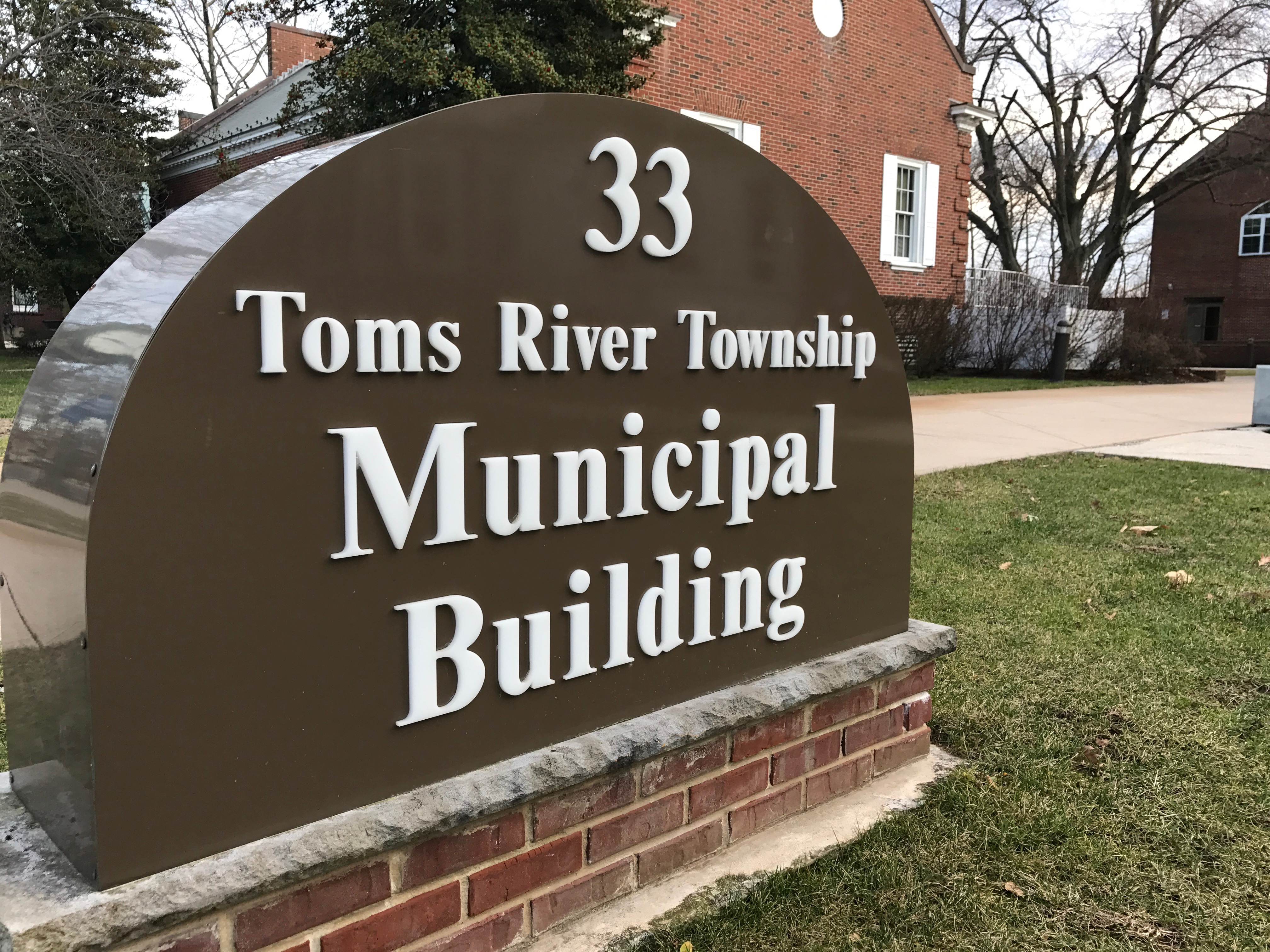
Toms River municipal building. (Photo: Daniel Nee)
A group of Toms River council members were accused of holding an ‘unlawful’ closed-door meeting this week during which the township clerk was removed, in order to discuss the matter of those members hiring an attorney to represent their interests in a lawsuit filed by a resident.
The seven-member council, though all Republican, is bitterly divided between two camps: three members who support Mayor Daniel Rodrick and three who oppose him. The four members who oppose the mayor voted in favor of stopping this Wednesday’s council meeting to recess into a closed session to discuss a lawsuit filed by a resident and Toms River Municipal Utilities Authority commissioner over the video streaming of council meetings. In New Jersey, minutes of meetings – including those of closed session meetings – must be kept and certified by the township clerk, but the clerk was reportedly forced to leave the meeting during which the lawsuit was discussed, raising questions as to whether a violation of the state’s Open Public Meetings Act occurred. The three council members who are aligned with the mayor opposed the resolution authorizing the closed, executive session.
The lawsuit in question was filed by Philip I. Brilliant, a TRMUA commissioner who also runs a Facebook page which routinely lambasts Rodrick and his staff. Brilliant has maintained that he is fighting against what he sees as a lack of transparency and honest governance by Rodrick, while the mayor has countered that Brilliant is motivated by anger over the mayor’s attempt to eliminate the MUA, from which Brilliant draws a personal health insurance package. The substance of the lawsuit sets aside the acrimonious relationship between the two men, however, and focuses on what has become a common practice at township council meetings: a live video stream cutting off after the “business” portion of the meeting, in which votes are taken and hearings are conducted. The streams have not included council members’ comments and public comments, though both do occur at the meetings themselves as required by law. Regardless of whether they are livestreamed, comments from the public can only be made by those who physically attend the meeting; no public comments are allowed to be submitted remotely.
New Jersey state law does not require meetings of municipal councils to be streamed or recorded at all, however many towns choose to do so voluntarily. Brilliant, in a complaint filed in May in Superior Court, argues that the current governing body, in a 4-3 vote, passed a resolution mandating that Toms River – specifically – is required to live-stream its meetings in full. But Township Attorney Jonathan Maciel Penney argued in a reply brief that the resolution passed by the split council is in violation of a state statute that holds a municipal council “shall determine its own rules of procedure, not inconsistent with ordinance or statute.” In the case of Toms River, he stated in the filing, the township’s type and form of government – outlined in a state statute – mandates that council members “shall deal with employees of the of the department of administration and other administrative departments solely through the mayor or his designee.” Since the township’s IT Department is an administrative department, the council cannot legally direct those employees how to videorecord meetings, he wrote, adding that the proper manner in which to mandate the terms of meeting videorecording is by way of a veto-proof ordinance.
Rodrick has held that the meeting livestream ends after the business portion of the meeting since members of a rival Republican club host what he called a “multi-hour filibuster” to seek publicity, driving up the cost of each meeting in which IT Department employees must remain.
Brilliant held is his own reply brief, however, that public comment “is part of the meeting.”
“It is part of the public business to be addressed by the governing body,” his complaint stated. “[The township] cannot divide a public meeting into a recordable ‘business end’ and an unrecorded portion whenever the public begins speaking.”
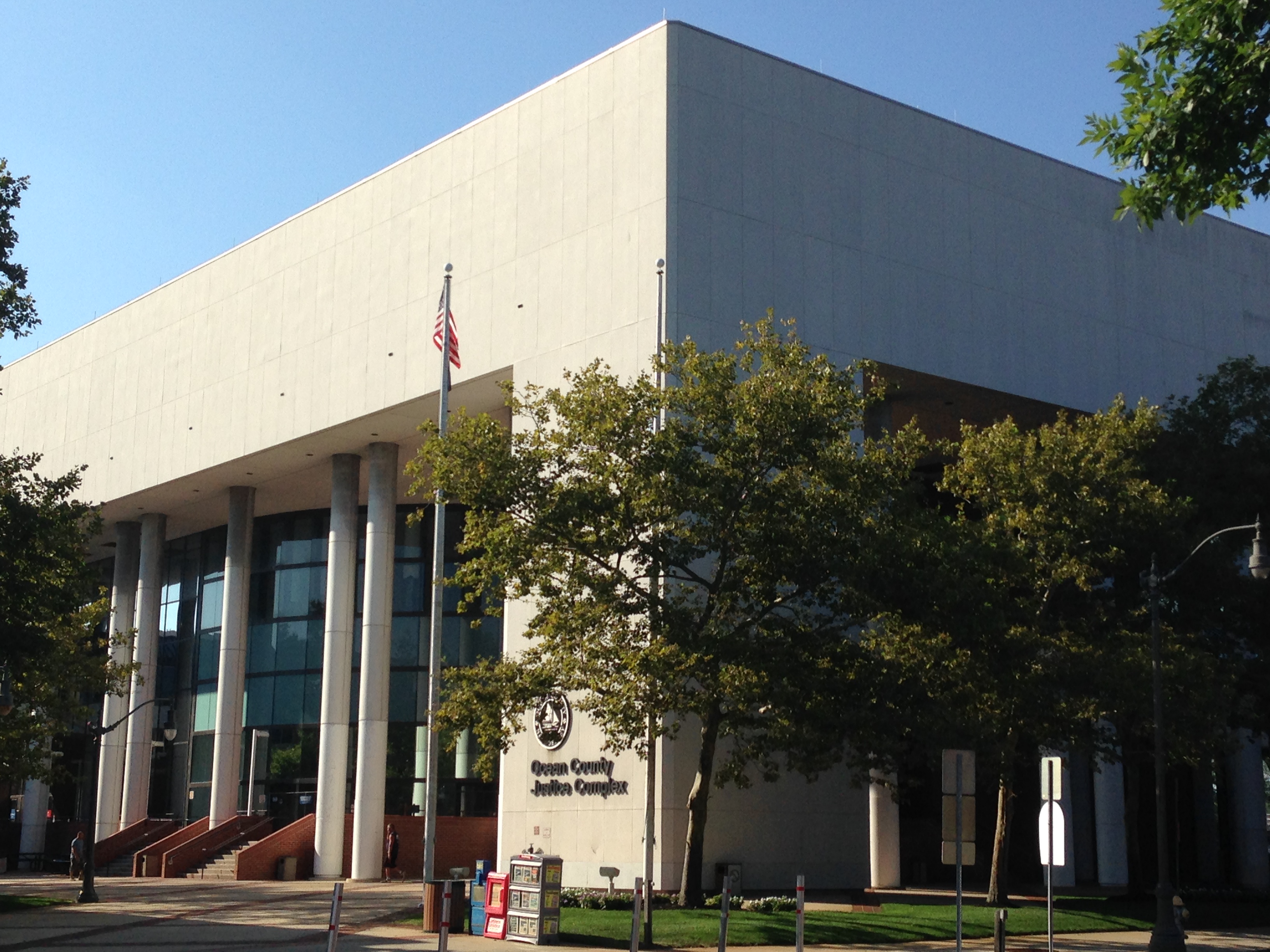
The Ocean County Justice Complex, Toms River, N.J. (Photo: Daniel Nee)
Superior Court Judge Francis Hodgson ultimately granted a motion for an order to show cause in the case – essentially, acknowledging Brilliant’s complaint and directing the township to defend against it – but did not grant a motion for emergent relief sought by Brilliant, who argued that he and residents would suffer “irreparable harm” unless the judge enjoined the mayor and his administration to comply with his requests. Oral arguments in the case have been set for August.
Brilliant’s lawsuit names the mayor, acting business administrator and the township council as defendants. In the vast majority of such circumstances, the township attorney would represent all parties, however the four-member council majority opposed to Rodrick believes they should be able to obtain their own legal representation separate from Penney, who was appointed by the mayor. To that end, the anti-Rodrick bloc has engaged the services of attorney Jason N. Sena, who previously represented the campaign of former mayor Maurice “Mo” Hill in a dispute with one-time Democratic opponent Jonathan Petro.
New Jersey law holds that when there is a conflict between a mayor and council, both sides must be represented by conflict counsel, which spurred the closed session meeting on Wednesday and a resolution hiring Sena. Penney, however, said the closed session meeting itself was illegal.
“I think that in that executive session, it was grossly improper to remove the clerk,” said Penney. “The definition of an executive session shows that the clerk needs to be there to take minutes. I think, by removing the clerk, you created an unlawful gathering of four councilmen, and I will be filing an order to show cause immediately to contest the resolution that you passed back in April.”
Sena appeared at the meeting and provided a brief statement.
“The motion, as I understand it, was to authorize my office on behalf of the township council to assert affirmative claims – not the township,” he said, before refusing to answer a question posed by Rodrick as to who holds the authority to hire attorneys and pay them using township funds.
Penney later said he did not believe Sena could be paid using taxpayer dollars if council members chose to align themselves with Brilliant – the plaintiff in a lawsuit in which they were named as defendants.
“I think if you do that, you would have to do that as [individuals], and I think you would have to pay for it individually,” Penney told the council members. “I don’t think you would be allowed to use township funds to cover the cost.”
Rodrick, for his part, defended ending the video stream after the business portion of the meeting came to an end, citing the group of members of a rival Republican organization who he believes intentionally “filibusters” meetings and seeks publicity by appearing on a live stream.
“Every meeting, four council members and a handful of members from Mo Hill’s unofficial Republican club stage a multi hour filibuster, often lasting until 10:30 at night,” he said in a statement issued Thursday. “I have four police officers who are getting overtime and then every single division manager and department head getting time-and-a-half in comp time. They are forcing me to give an extra two and-a-half weeks of vacation to people who are already entitled to five weeks. It’s a very costly, staged political stunt. If they want to engage in politics, I am not going to allow it to occur on the taxpayers’ dime.”
Taxpayers ultimately would pay for the IT staff to continue recording and streaming meetings during this time period, he said.
“The same five people are allowed to get up multiple times and continue to speak,” said Rodrick. “This is all political theater and the taxpayers shouldn’t be required to pay for their political shenanigans.”
No new filings in the case had appeared by the end of business on Friday, according to a search of court records.