

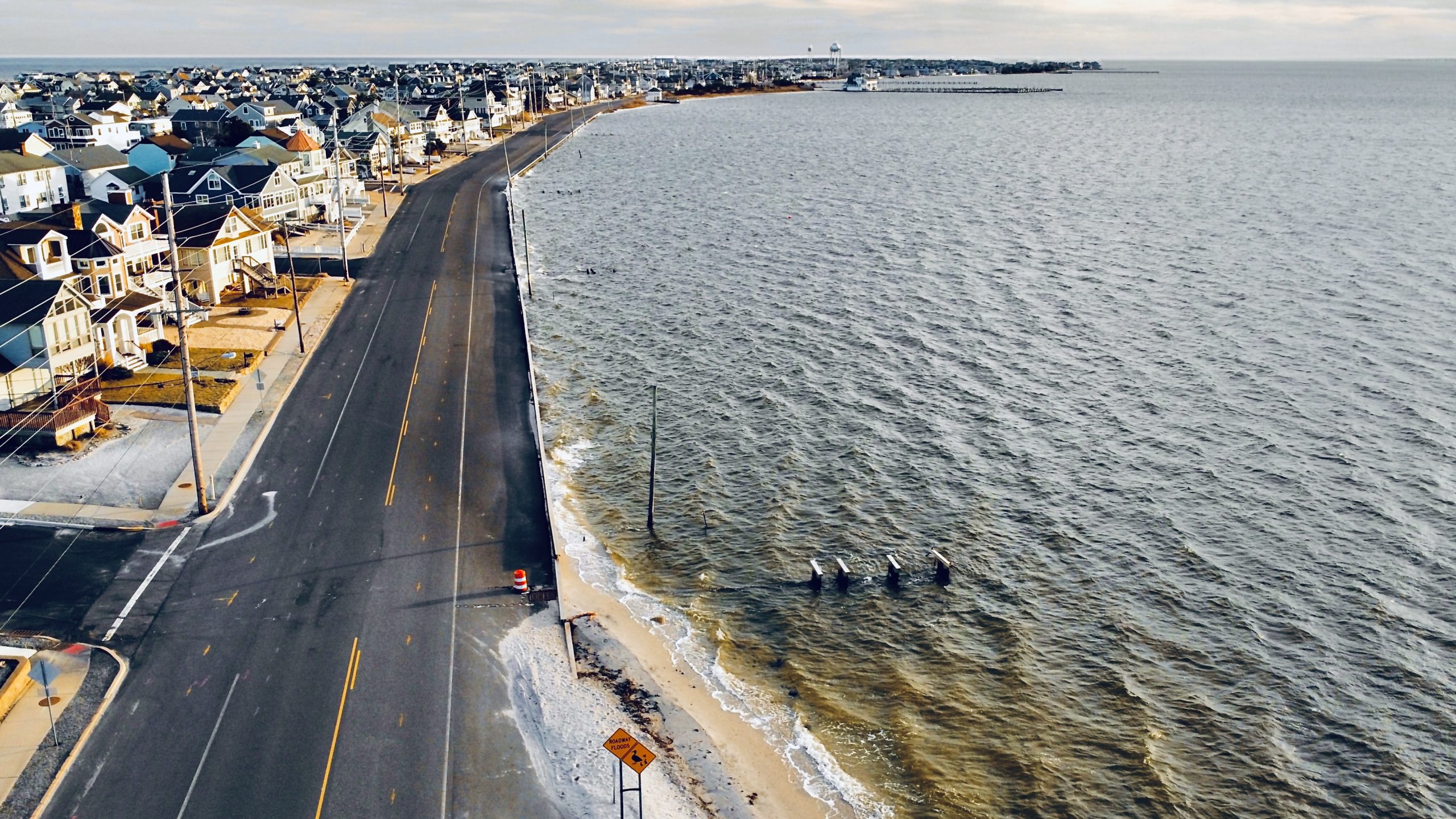
The Seaside Park bayfront along Bayview Avenue, Feb. 2023. (Photo: Daniel Nee)
A tale of bureaucratic red tape that has languished for years in Seaside Park – all to improve the bayfront environment and mitigate flood hazards – will continue into what frustrated officials hope is the final stretch.
Seaside Park’s long-proposed project seeks to build out a number of platforms on the bayside to mitigate flooding, protect the shoreline, form a breakwater and foster the growth of native species on a “living reef” which would naturally absorb the impact of wave action. In a move few initially thought would be feasible, the borough – with assistance from a team of engineers and academics from Stockton University – successfully convinced the state that the shoreline could be safely restored to its former size, as published in a 1977 survey. This would add a larger beach berm to the bayfront.
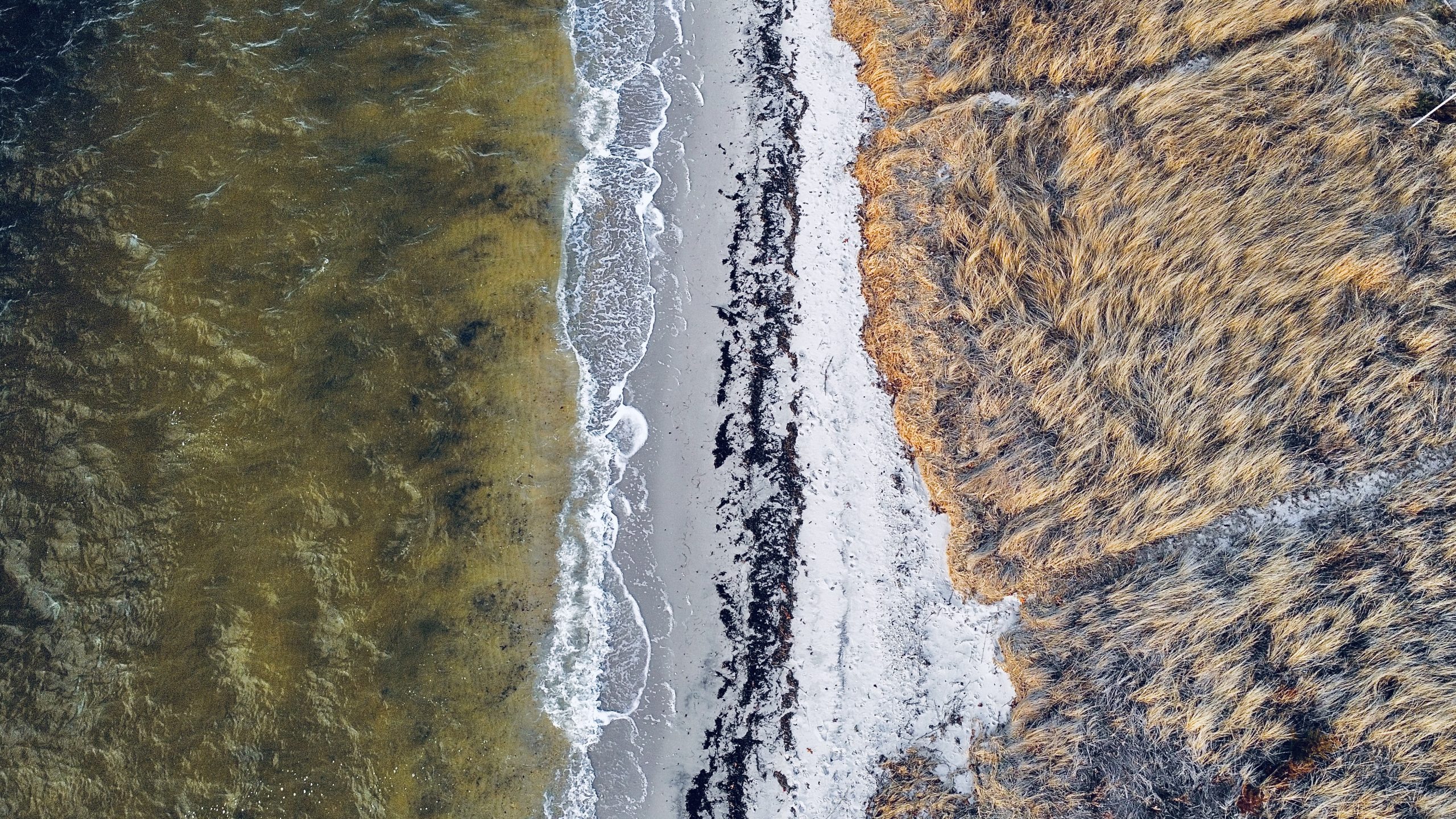
The Seaside Park bayfront along Bayview Avenue, Feb. 2023. (Photo: Daniel Nee)
The borough has received all of the approvals needed to begin the project from the state, county and other permitting agencies, except the U.S. Army Corps of Engineers, which has held the entire project up for years over concerns of the potential disturbance of “submerged aquatic vegetation” – commonly referred to as “seaweed.” The overarching issue, however, is that multiple studies, aerial photographs and physical walk-throughs have already proven that there is no SAV in the area where the project would be effectuated. But some believe that with the change in presidential administrations along with support from the town’s congressional representative, there could be a window in which a final study could put the issue to bed.

Seaside Park in the NJDEP’s 1977 tidelands base map. (Credit: NJDEP)

Seaside Park in the NJDEP’s 1977 tidelands base map. (Credit: NJDEP)
The borough council last week approved changing the scope of its federal permit to include a formal SAV study. The federal permit is being authored by RVE Engineering, which will be paid $7,500 for the scope expansion. The study will be conducted by noted biologist Dr. Paul Bologna of Montclair State University, along with several of his graduate students, to provide a final comprehensive study on vegetation in the area. Bologna has told borough officials that a three-day window between June 17 to June 19 represents the absolute peak growing season for SAV and the study will be timed for exactly those dates.
Some council members, and members of the public, were skeptical as to whether another study would turn the tide after years of what many view as the federal government ignoring more and more evidence over the lack of sea grass in the area.
“Some cynics feel that is the very goal of some of the bureaucracies involved – they want the town town go away on this issue,” said Mayor John Peterson. “But I’ve been polite and courteous, as everyone has. We’re hoping that this will box them in – we’ve complied with everything that has been asked of us, even if it doesn’t appear reasonable on the surface.”
Councilwoman Gina Condos was among those who support the project, but also questioned the utility of another study.
“We keep doing survey after survey and research after research … will this be, kind of, the last shot at this particular project?” she asked. “Otherwise it’s like a never-ending pit.”
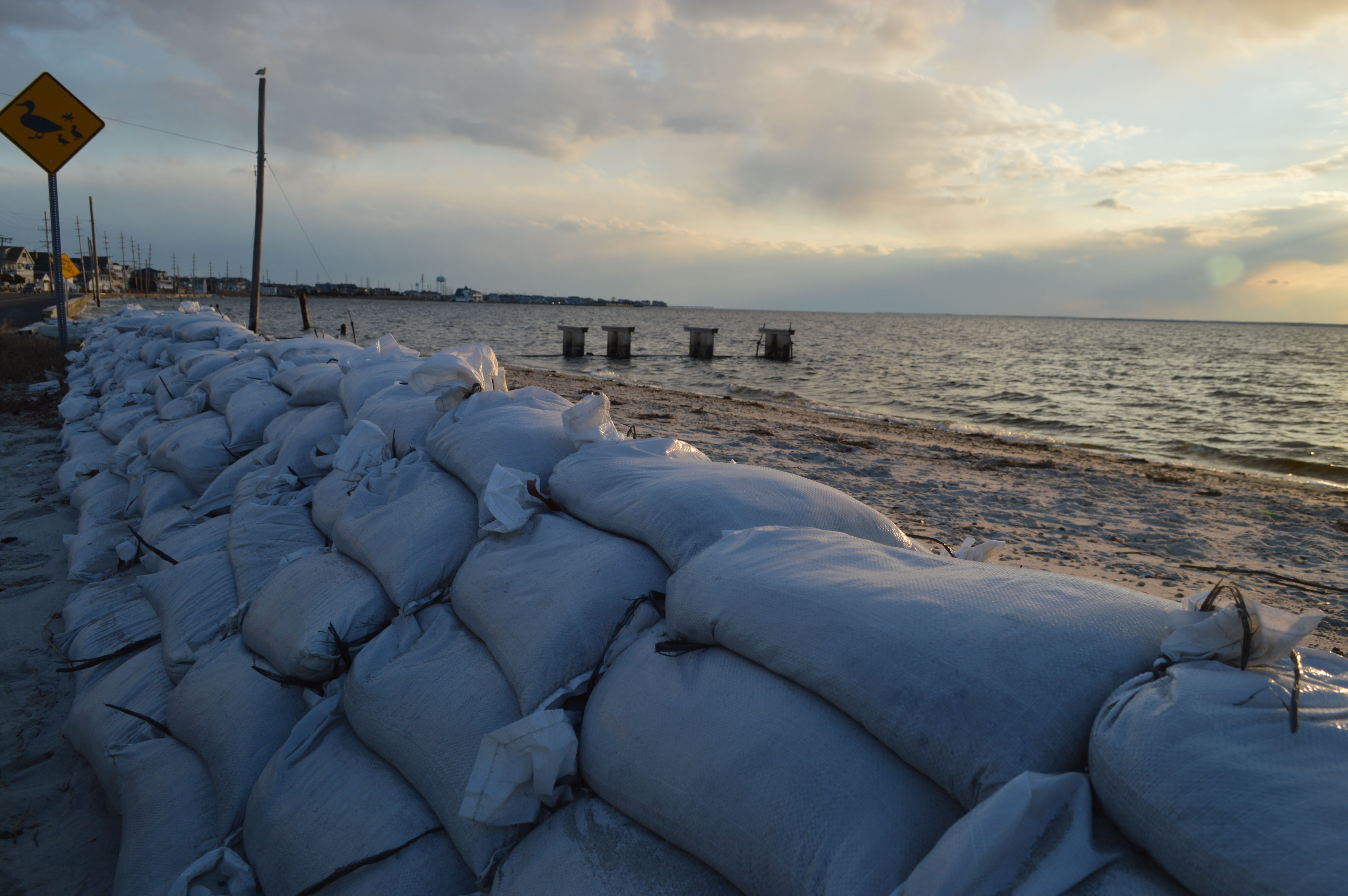
Sandbags positioned along North Bayview Avenue in Seaside Park, Jan. 20, 2017. (Photo: Daniel Nee)
Peterson and others said that, while there is no guarantee that the updated plan to be submitted to the federal government, which will include the study, will produce a permit, it will seal the fact that the borough has gone through all of the steps necessary to formally prove what many have already stated.
“After about 86 days that it didn’t rain last year, we had some of the most remarkable views down into the bay ever,” said Peterson. “You could see ten, twelve feet down clear. There was no grass.”
During a particularly strong blowout tide last fall, the Ocean County Sheriff’s Department even loaned the use of its drone to the borough for the day to attempt to find any sea grass beds. They found none. Prior to that, borough officials physically walked the bayfront with biologists and federal regulators to prove no sea grass was actually growing in the area. The federal government later responded that despite the fact that no vegetation was growing, there theoretically could be growth at some point, thus a formal “mitigation plan” was required as part of the permitting package.
Hence, the project scope expansion by the borough’s engineering firm.
“This would allow RVE to adapt the plans to what their requirements would be,” Peterson explained. “As Dr. [Stewart] Farrell has demonstrated years back, none of the coastline – the sandy bottom beach – has any SAV on it, and we feel there are minimal SAV areas out in the water where the oyster reefs are proposed.”
The development of the mitigation component for the federal permit, as well as the study to back it up, were both approved.



Seaside Heights & Seaside Park
Star-Studded Cold War Spy Thriller To Be Filmed in Seaside Park in July


Seaside Heights & Seaside Park
Hovnanian Development in Seaside Heights Takes Shape, Sets Pricing


Shore Environment
Waves Wallop Ortley Beach, Ocean Roars As ‘Erin’ Remains Offshore


