


Renderings and plans for the former ‘steel structure’ redevelopment effort, Seaside Heights, N.J. (Source: SSH Redevelopment Plan Deck)
Coastal redevelopment across the United States has often relied upon high-rise residential buildings to revitalize communities and spur development opportunities to take advantage of ocean views. Locally, Long Branch has most prominently developed tall buildings along its beaches as the transformation of that town has taken shape over the past two decades, and Asbury Park has grown more dense – and tall – with a return to higher buildings. The tallest building there was constructed in 1974, and rises 256 feet to encompass 27 stories. High-profile coastal towns out of state, like Naples or Boca Raton, FL, saw their oceanfront areas dotted with tall buildings interspersed by public beach access points as they transformed from small communities to large ones.
In Seaside Heights, the borough council first dipped its toe into a tall – but not as tall – project with plans approved for a 10-story mixed-use building to replace the “steel structure” at Hamilton Avenue and the Boulevard in 2021. As Shorebeat has reported in recent months, the plans fell apart following years of inaction by the would-be redeveloper. Last week, news emerged that the developer is suing the borough in the wake of the aborted partnership. But more importantly, the borough council took the first step toward soliciting proposals for new private developers to build on the prime property located in the center of the town’s business district. This time, however, whatever building will be constructed there will be capped at just five floors and 60-feet – a more modest approach that borough officials say is the result of a preference both on the part of elected officials and feedback from residents.

The Seaside Heights boardwalk, Oct. 2023. (Photo: Shorebeat)
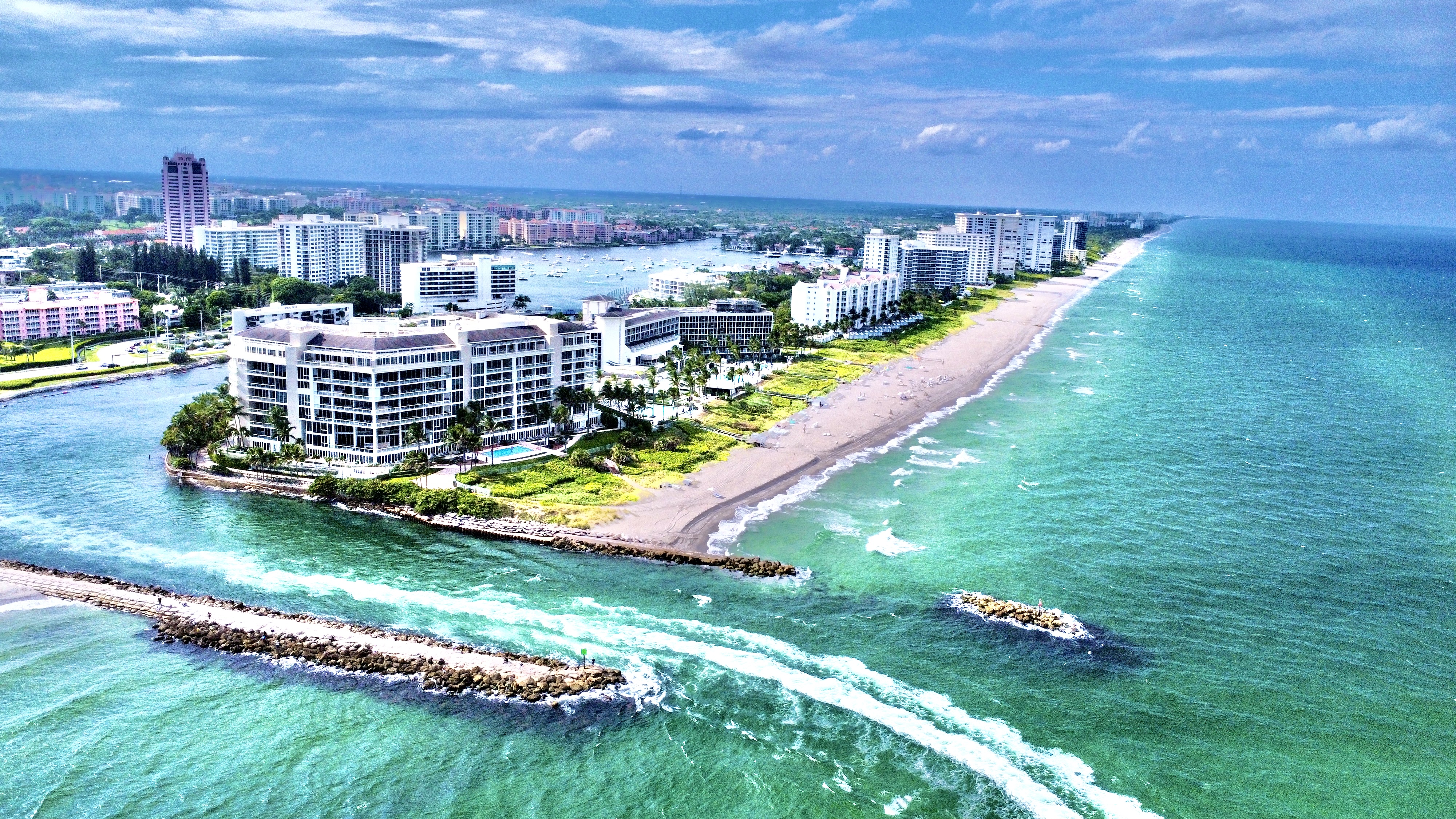
The oceanfront in Boca Raton, FL, looking north from Boca Inlet. (Photo: Shorebeat/Boca Daily News)
“It was really about two things,” said Mayor Anthony Vaz. “We heard feedback from the public, obviously. But we also now have some experience. When they came in with this grandiose project, we knew it was high, but we approved it. We wanted our first project to get off the ground, and be something good for the town, especially after all those years.”
The 10-story building would have replaced the long-rotting steel framing and girders that rusted in storms and baked in the sun for a decade – the result of yet another construction project that never came to fruition. That building had been envisioned as an entertainment complex with nightclubs, restaurants and a pool club – a concept that had become a relic of the late 1990s and early 2000s nightclub craze that spurred MTV’s “Jersey Shore.” The raucous club scene has exited Seaside Heights, and even in areas where nightlife is still central to the economy, the business has shifted toward high-end clubs, often paired with premium hotels and resorts. In Seaside Heights, the focus has been on maintaining a more family-friendly boardwalk while hoping for mixed uses of retail, restaurant and residential development along the Boulevard corridor. The central business district has always been dense – but never tall.
“During the course of redevelopment across the whole community, we found that people were concerned about the ‘hype,’ so to speak,” said Vaz. “We took that seriously, and we said, ‘Well, you know what? That’s probably right.’ It doesn’t have to be about the height, but the beauty of what’s going to be built.”
As the vision for large-scale redevelopment evolved into a theme, the cadre of architects who have designed the majority of the Seaside Heights’ redevelopment properties have focused on a “modern coastal” design rather than those typically found in high rises. As recently as last week, planning board members approved a new condominium building on the northern end of the boardwalk – replacing what has long been an empty lot – but were able to persuade the developer at the meeting to utilize “beachy” colors rather than an industrial-style theme that might be more suited to major coastal cities like Miami or San Diego.
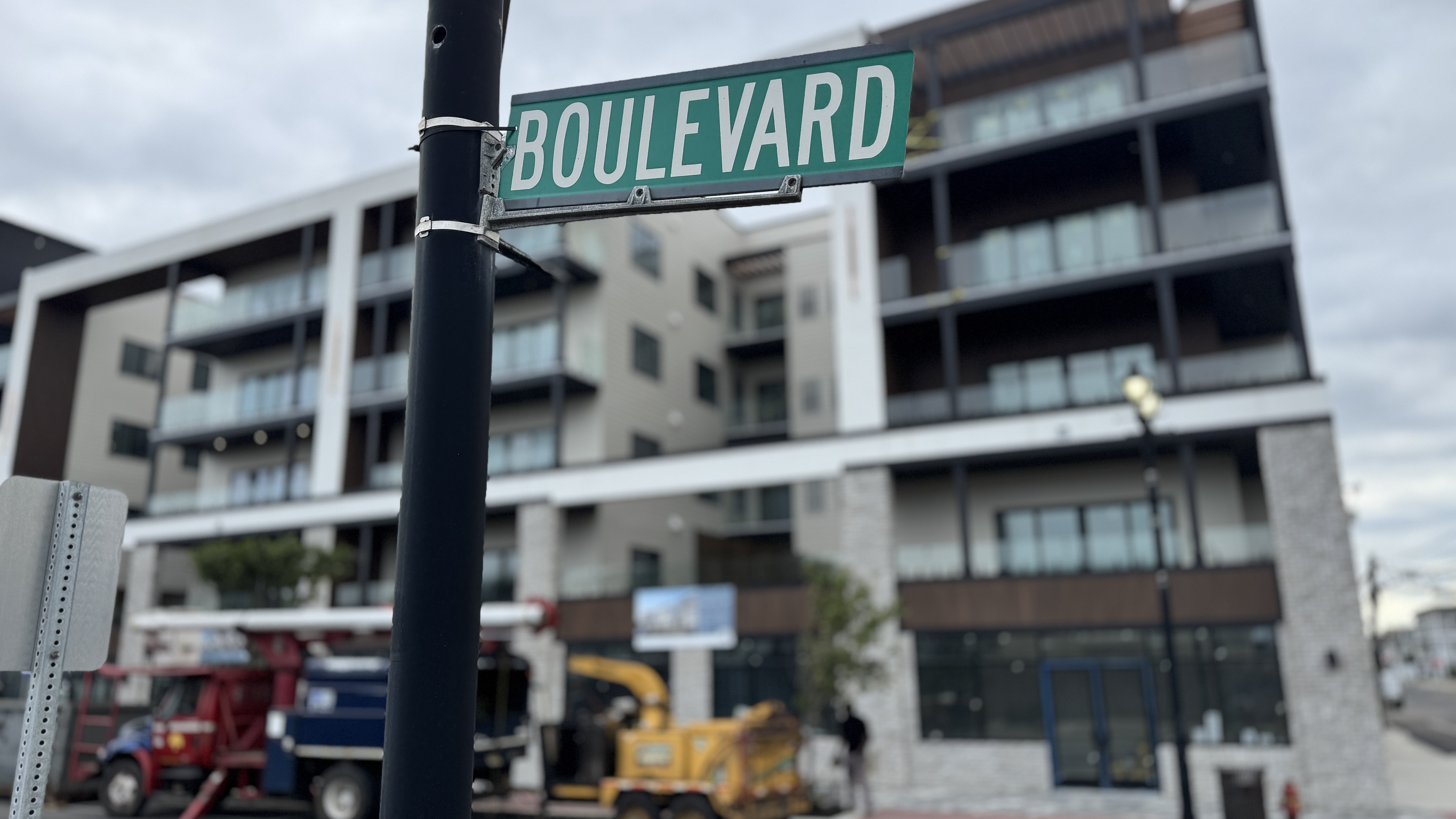
The ‘Coastal Edge’ building under construction on the Boulevard, Seaside Heights, in 2025. (Photo: Shorebeat)
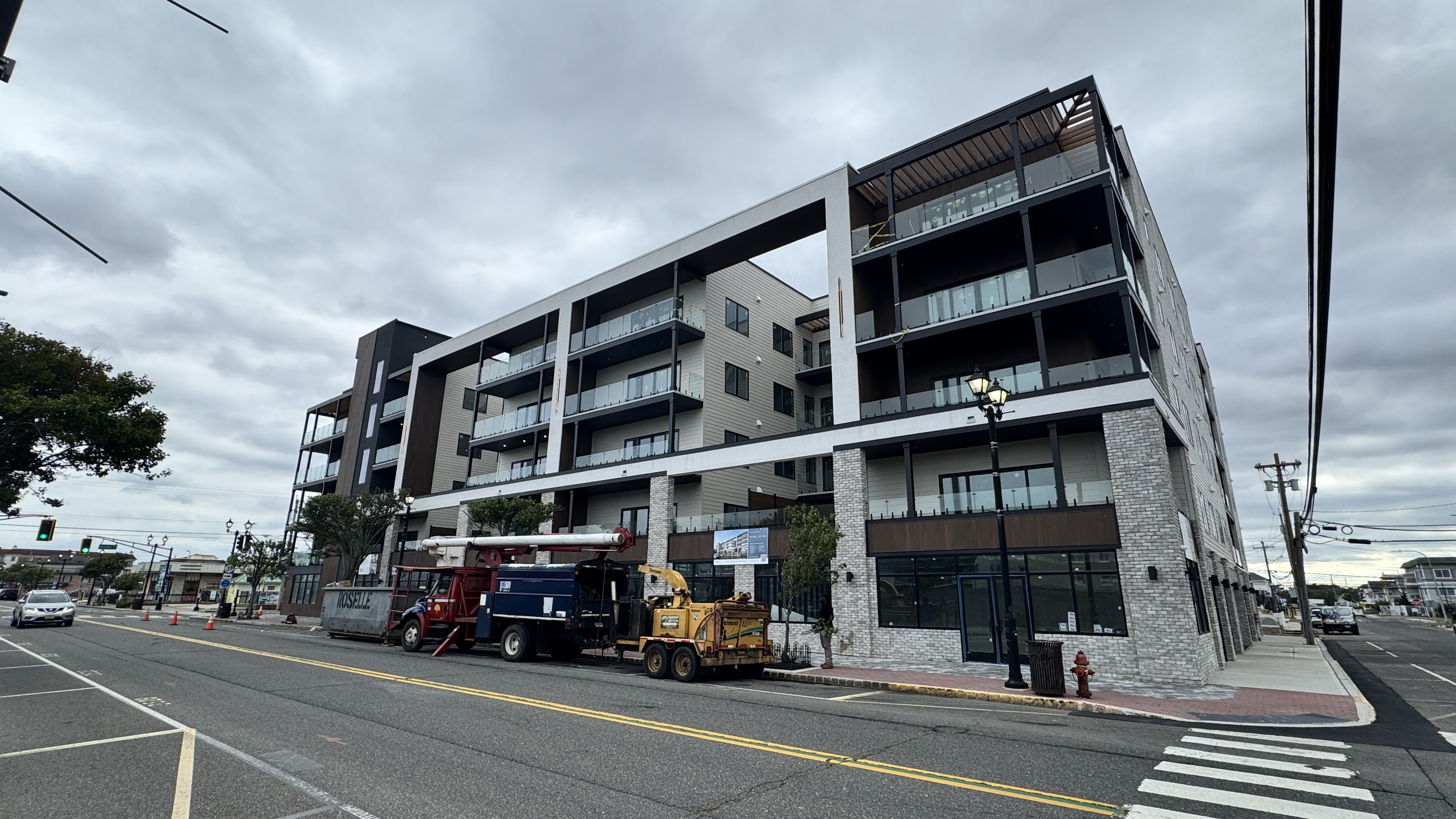
The ‘Coastal Edge’ building under construction on the Boulevard, Seaside Heights, in 2025. (Photo: Shorebeat)
Redevelopment along the Boulevard – and elsewhere – has proven a smashing success. The large “Coastal Edge” property replaced the former Karma nightclub and is now bustling with sales, and drawing eyes of passersby with its edgy design and mixed-use energy along the main thoroughfare. A five-story, 48-unit condominium building is finally being proposed for the property that once housed its sister-nightclub, Bamboo. Along Ocean Terrace, the 500 Ocean property has drawn a great deal of interest from buyers across the street from the boardwalk. And K. Hovnanian injected a great deal of confidence in the town’s redevelopment plans after they purchased multiple properties – including one which housed a troubled motel – to build a townhome community on the south side. All of the buildings have one thing in common, however: they don’t exceed five or six stories, depending on when they were approved.
“All of those redevelopment projects had similar height requirements and restrictions on them,” said Vaz, indicating that moving forward, height will be a consideration in redevelopment projects.
In New Jersey, designated redevelopment sites differ from a general piece of property being offered for sale. When a property meets certain criteria, including a study conducted by professionals who testify before the planning board, they can be formally declared an “area in need of redevelopment.” That means the town can individually set their own specifications for that redevelopment, which would differ from the traditional zoning that governs and particular block and lot. The idea is to spur development in places that have languished without previous interest, or to quickly improve an area that has deteriorated.

A proposed mixed-use property to replace the ‘steel structure’ in Seaside Heights. (Photo: Daniel Nee)
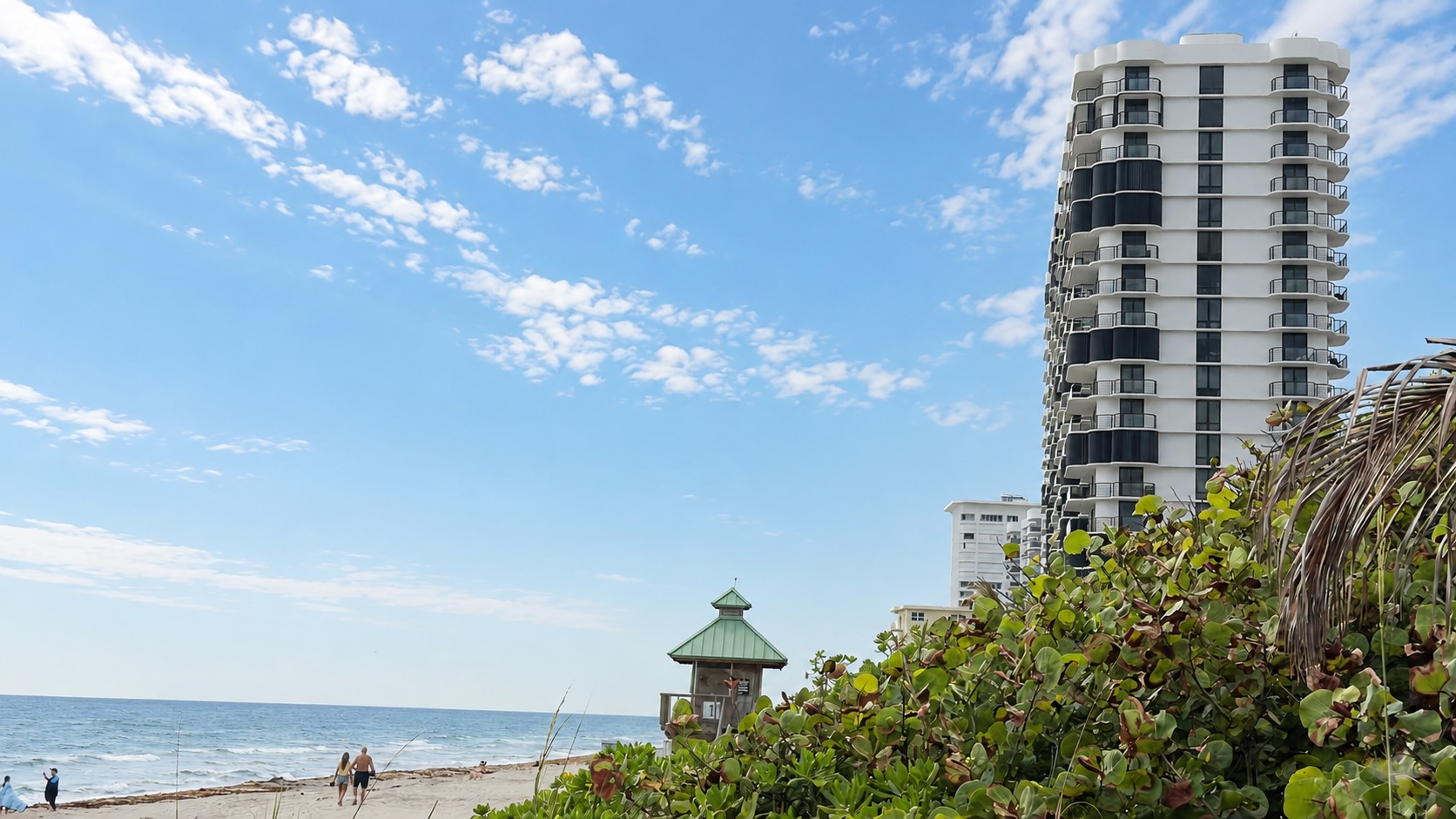
High-rises along the ocean in Boca Raton, FL. (Photo: Shorebeat/Boca Daily News)
“We had people go to the planning board – public participation – and give their feedback,” said Vaz. “Height seemed to be the biggest factor in things that came up. They didn’t want it to be ‘another Long Branch’ where you have 10 story built all in a row. It works in some places like there and in Naples [Florida], for instance, but in those places you’re talking about a city versus what most people here consider a town.”
Last week, the council authorized “requests for expressions of interest” for new ideas on the “steel structure” property, though no formal request for proposals are being accepted. At the same meeting, the governing body authorized a fourth amended redevelopment plan, this time limiting the height of a prospective building to five stories. The Hamilton Avenue project will almost certainly not be the last redevelopment designation in Seaside Heights, but it is expected that the borough’s experiment with tall real estate has ended.
“There was a lot of excitement at the first big project, and through discussion and a little persuasion, we approved it,” he said. “But in the future, we have an obligation to listen the community, and that [building height] was the most common concern.”




Seaside Heights & Seaside Park
Seaside Heights Bursts Onto Arts Scene With ‘Gallery 619’ In the Heart of Town


Boating & Fishing
Seastreak Ferry Service to Point Pleasant Beach Nixed After Council Vote


Shore Environment
Waves Wallop Ortley Beach, Ocean Roars As ‘Erin’ Remains Offshore


