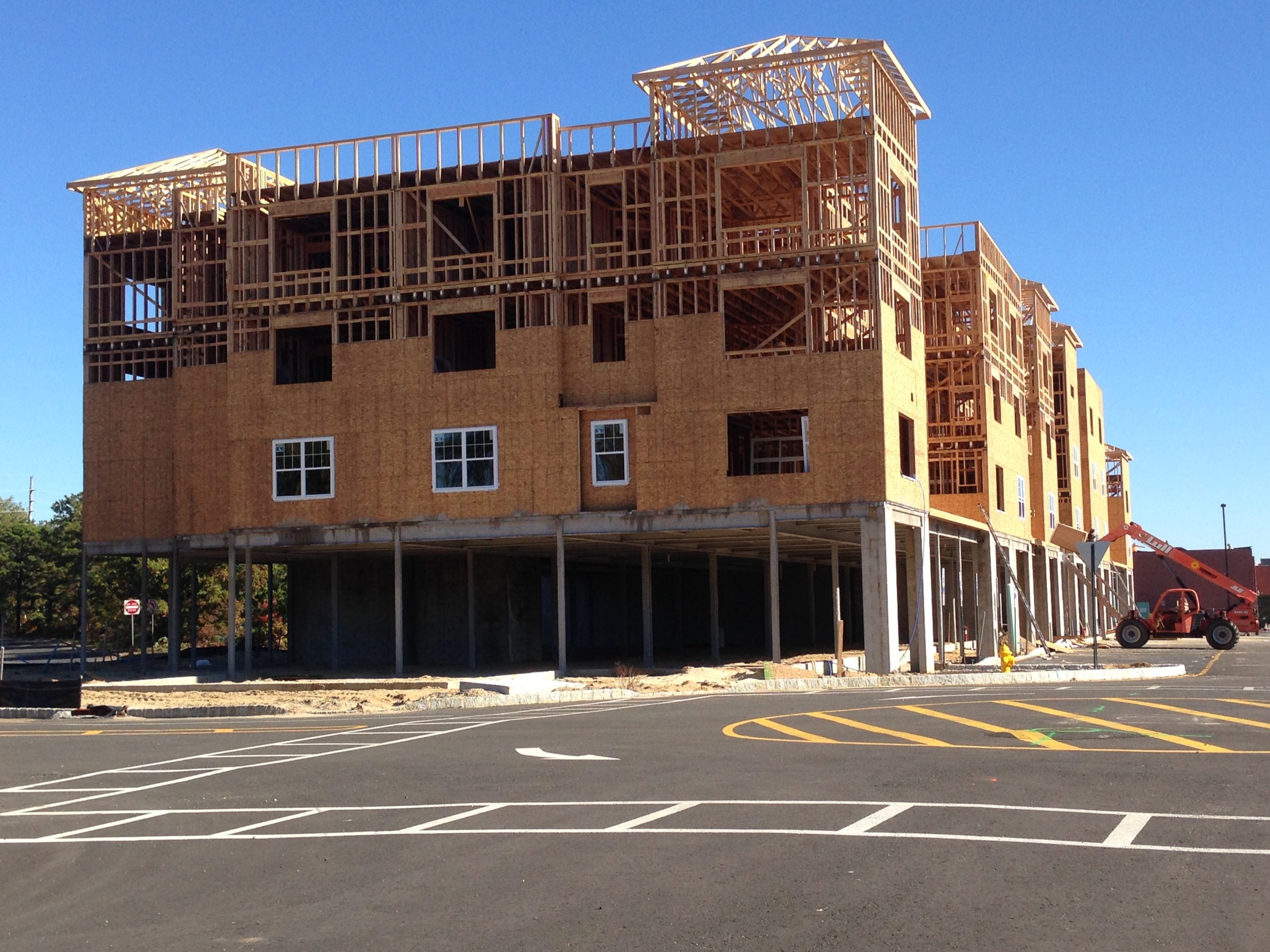
A condominium under construction in Toms River. (Photo: Daniel Nee)
A judge has granted a request by Toms River Township officials to extend the deadline to pass several measures which would effectuate an affordable housing settlement, or risk so-called “builder’s remedy” lawsuits moving forward.
Superior Court Judge Sean D. Gertner found that the township must pass resolutions and ordinances that enable zoning changes by April 9, 2026, or face lawsuits from developers since it would be out of compliance with a settlement negotiated between the township and the Fair Share Housing Center, an activist group that sued nearly every municipality in New Jersey in an attempt to force more housing units to be constructed under the state’s Mt. Laurel doctrine. If the township council does not pass the measures in time, Gertner ruled, immunity from builder’s remedy lawsuits would end.
Toms River was ordered by the state in 2025 to provide 1,700 additional units of designated affordable housing in calculations promulgated at the time. Generally speaking, the 1,700 units would have been provided at a 20 percent ratio to market-rate units, meaning that more than 8,000 units would have to be built. The township put forth its own calculations opposing the state’s data, but the Fair Share Housing Center challenged the township’s findings. Fair Share Housing Center filed hundreds of lawsuits challenging the data from municipalities last year, effectively forcing settlements from the communities. Under Toms River’s form of government, the settlements are negotiated by the mayor and his administration, but must be codified into law by the township council by way of ordinances and resolutions adopting zoning changes. The council majority – engaged in a bitter, ongoing fight with the mayor – refused to pass the zoning ordinances after they disagreed with a portion of the settlement, leading to the current stalemate.
As part of Toms River’s settlement negotiated by Mayor Daniel Rodrick and approved last year, the township agreed to create 183 new housing units, while placing deed restrictions on a number of other properties – including the Hope’s Crossing development – that would keep them designated as affordable housing for another 30 years. The controversy developed due to the fact that the township required a “back up” plan since the Hope’s Crossing development owner has, thus far, not agreed to the deed restrictions that would keep the development under the affordable designation. The backup property was the swath of vacant land purchased by the township for $10 million under the administration of former Mayor Maurice “Mo” Hill. While the land was purchased by the township in 2016, it was never designated as open space – simply publicly-owned land – meaning it theoretically could be sold for development in the future. While there are no proposals to do so, objections were raised about the former farm property being part of the settlement.
A group of four council members opposed to Rodrick – Robert Bianchini, Thomas Nivison, David Ciccozzi, and Clint Bradley – either abstained from voting on those ordinances or voted them down. Rodrick’s allies on the council, Craig Coleman, Lynn O’Toole and Harry Aber, voted in favor of the ordinances. The four-member majority aligned against Rodrick said they were responding to concerns from residents of the Lake Ridge development, which is located near portions of the overlay zone.
Gertner’s ruling has placed all sides in a legal bind. Should the mayor and council majority fail to reach an agreement under which the zoning ordinances would pass, the entire settlement in the case brought by the Fair Share Housing Center would be nullified. This would open the township up to so-called “builder’s remedy” lawsuits, in which private developers would have the ability to purchase land and develop it as they see fit – under a court order – to effectuate the state’s initial 1,700 unit calculation. The developers would have the right to bypass the township’s existing zoning ordinances covering density, building height, and other factors in order to privately enforce the obligation to provide income-restricted housing units.
One such lawsuit has already been filed on behalf of the developers of the controversial Meridia Toms River housing proposal, a 281-unit project that was canceled by Rodrick after he was elected mayor following a campaign that centered on opposition to what many saw as overdevelopment. That lawsuit is currently on hold – but not dismissed – pending a hearing April 23, 2026 during which Gertner will review Toms River’s actions, or lack thereof, on the affordable housing settlement. It is widely expected that additional developers will file similar lawsuits, which would enable them to build thousands of housing units on various parcels of land within the township.
A township council meeting last week descended into what has become a routine level of chaos and name-calling involving council members, the mayor and members of the public. The meeting ended without council approval of the zoning measures, leaving the township with one more chance – the April 8, 2026 meeting – to either approve the zoning changes contained in the settlement or be found out of compliance and open to builder’s remedy claims.
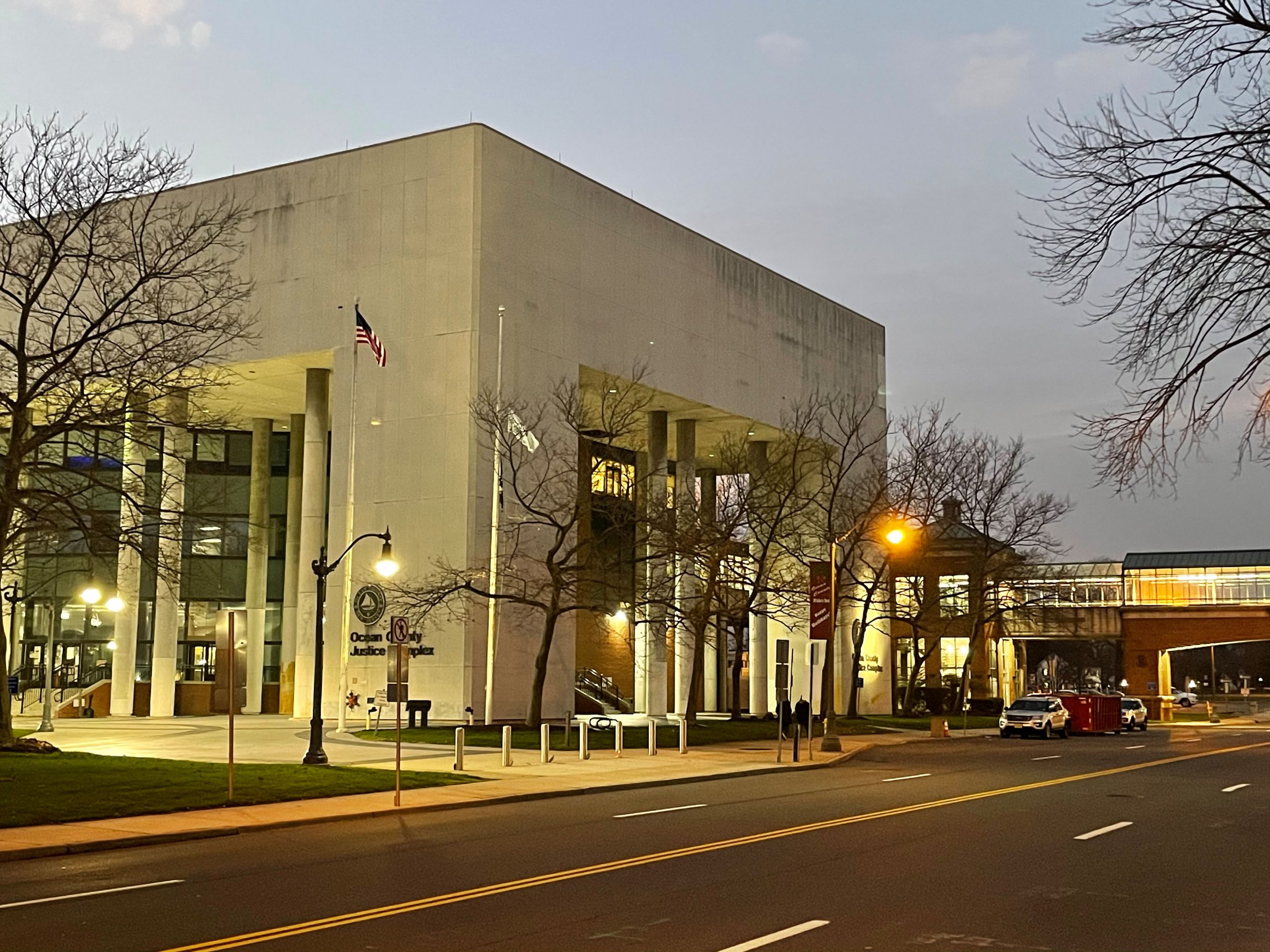
The Ocean County Justice Complex. (Photo: Daniel Nee)
In the mean time, litigation between the Fair Share Housing Center and builders will be allowed to continue despite the immunity in order to “permit those challengers the opportunity to be heard, while continuing to encourage good-faith negotiation,” Gertner ruled. Gertner also encouraged township officials to work with retired Superior Court Judge Mark Troncone, working as a mediator, and Kendra Lelie, a licensed planner, working as a “special adjudicator,” to bring the matter to a conclusion.
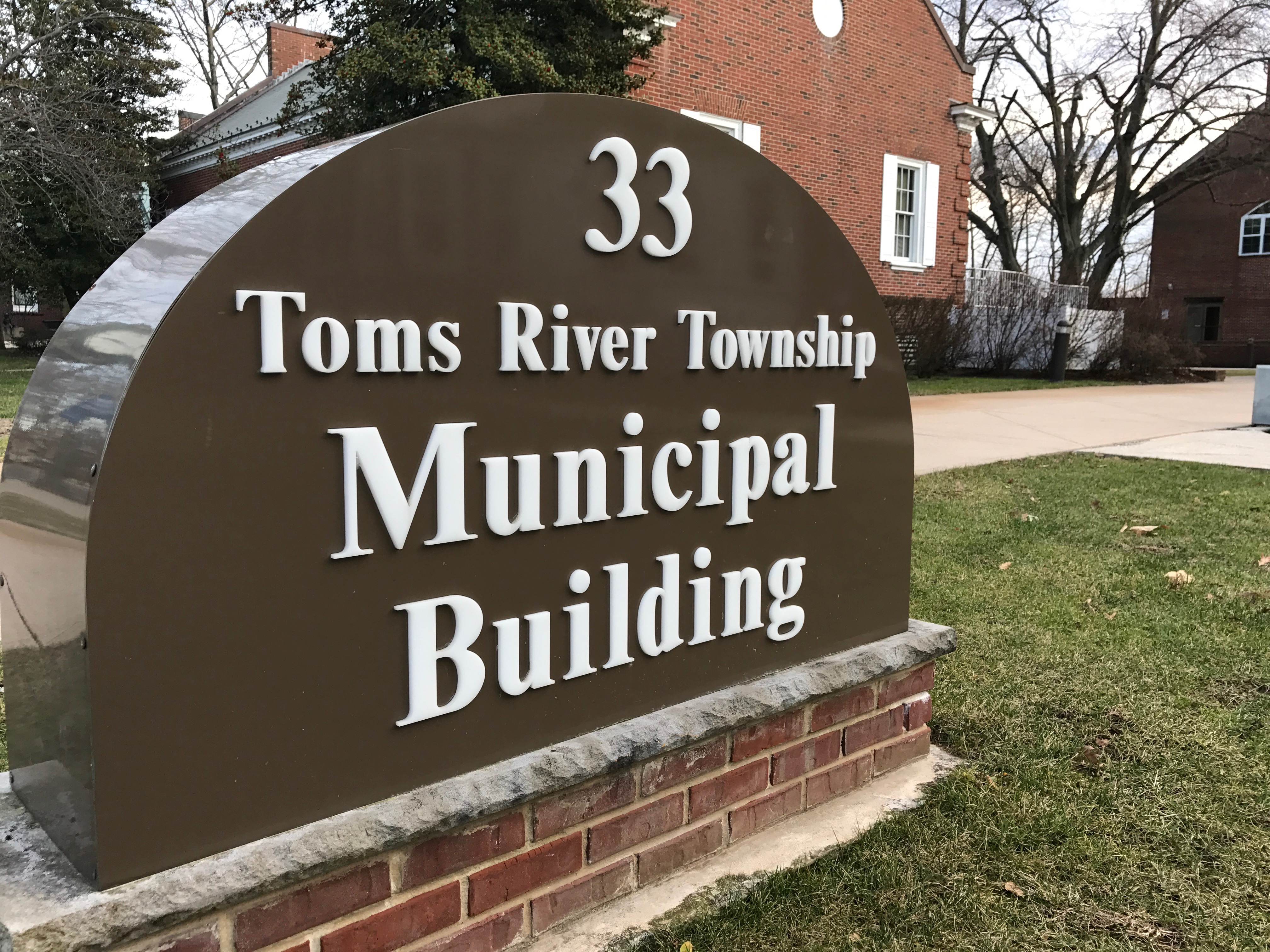
A copy of Gertner’s order appears embedded below this article. The council’s April 8, 2026 meeting is scheduled for 6:30 p.m. in the council chambers at the municipal complex on Washington Street.
Read the Ruling:
[scribd id=1020386769 key=key-dkOJ5rd845Vjf3vCavQY mode=scroll]

Police, Fire & Courts
Toms River Physician and Family Killed in Upstate N.Y. Plane Crash