

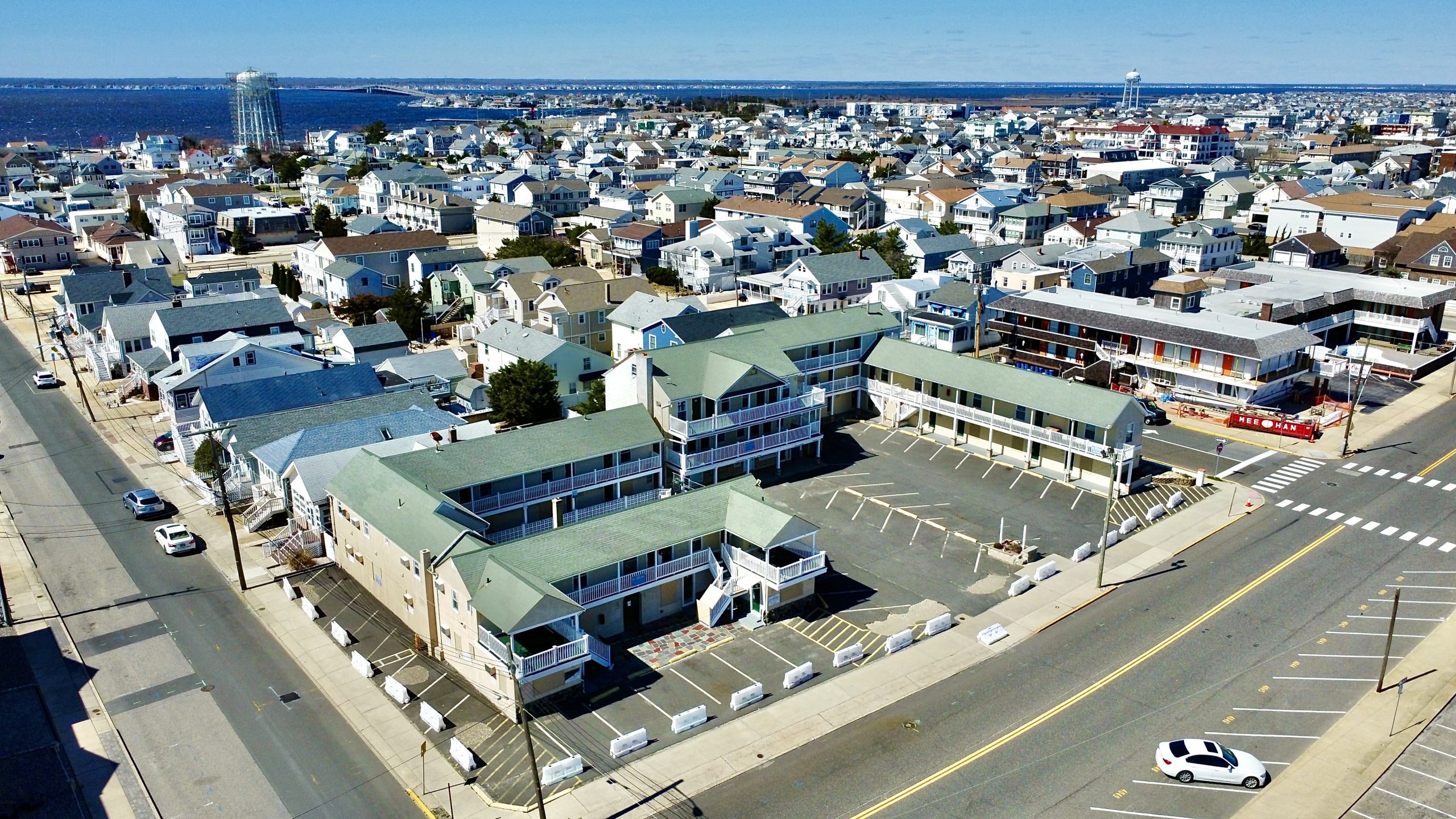
The Desert Palm Inn, March 21, 2024. (Photo: Shorebeat)
The case of the condemnation of the long-troubled Desert Palm Inn Motel will be heading to the New Jersey Supreme Court after decisions at both the trial and appellate levels favored the borough – with its owner continuing his years-long fight despite the borough having taken ownership of the property.
The Supreme Court granted certiorari earlier this month, and will consider a relatively narrow portion of the case as it pertains to a statewide constitutional question. The building was condemned based on a study conducted on the property that found more than 800 police responses over five years, exposed wiring, sagging floors and mold, among numerous other structural deficiencies and safety violations. The former owner, physician Ramesh Kania, opposed the condemnation to no avail. In court, his attorneys argued that Seaside Park took the property for the purposes of a public use, but never articulated the public use in the form of an ordinance. The trial court in Ocean County, as well as appellate division judges at the state level, all rejected that argument, citing case law which provides municipal governments significant latitude in identifying a public purpose and its appropriateness. It is this facet of the litigation that the Supreme Court will consider.
Kania has asked the court to dismiss the original condemnation complaint.
The court does not issue justifications or opinions when deciding to grant certiorari, but does make note of the legal question that will come before the justices. In the case of the Desert Palm: “Is the ordinance that authorizes a municipality to acquire property through its eminent domain power under the Local Land and Buildings Law, N.J.S.A. 40A:12-5(a), required to set forth the specific public purpose for which the property is being acquired?”
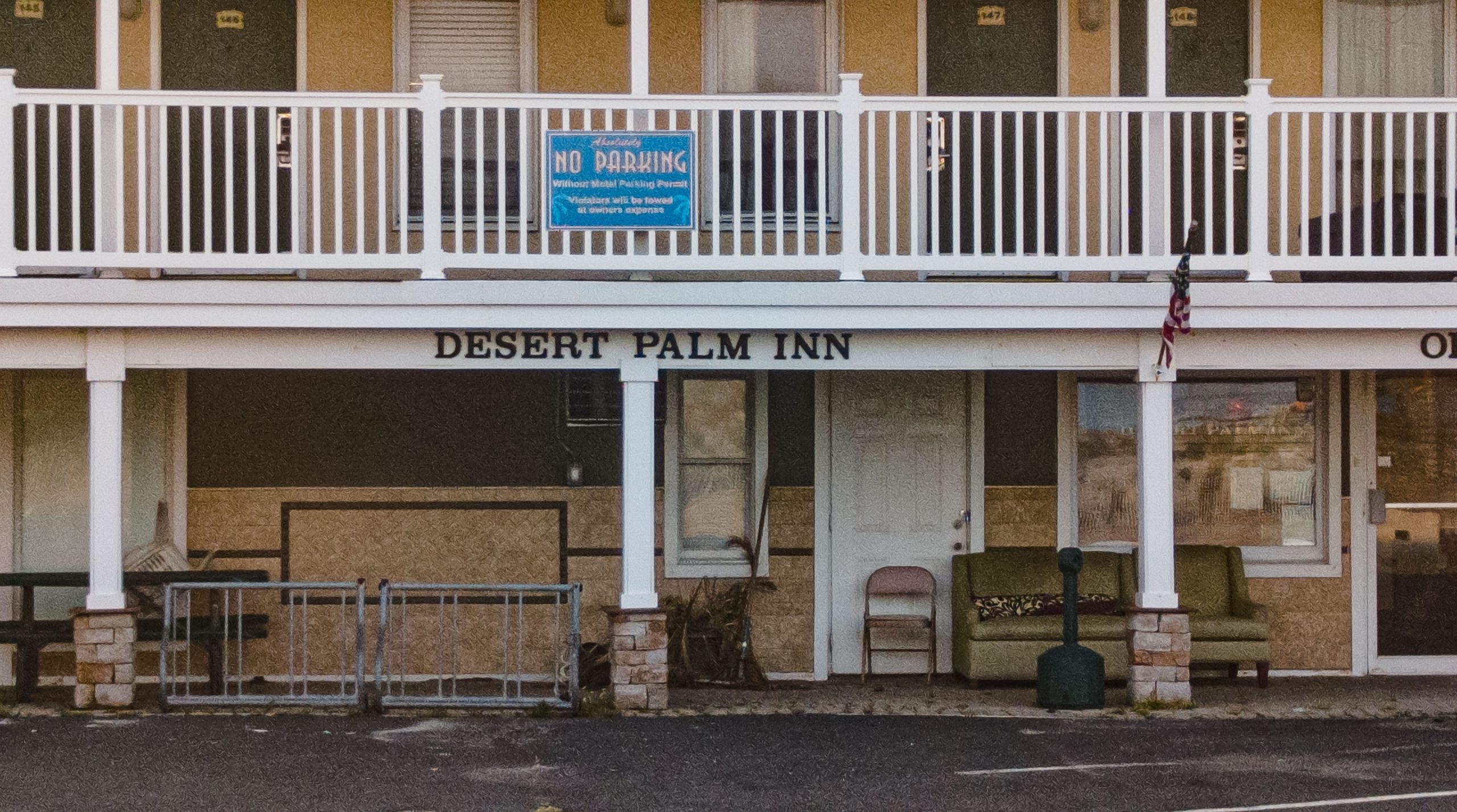
The former Desert Palm Motel, Seaside Park, N.J., May 2023. (Photo: Shorebeat)
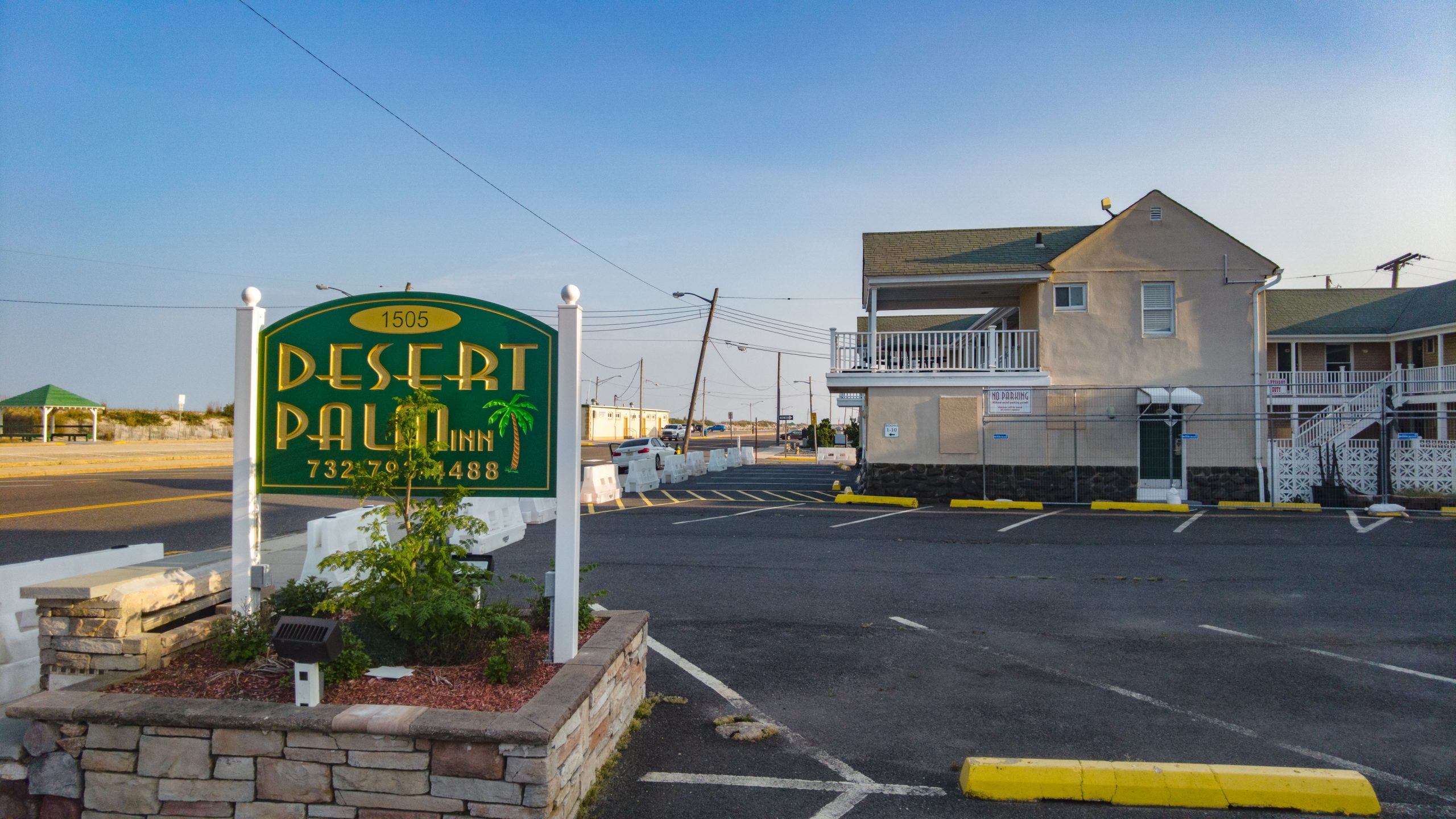
The former Desert Palm Motel, Seaside Park, N.J., May 2023. (Photo: Shorebeat)
Seaside Park officials have openly stated that they are seeking to build a well for the borough’s water utility at the property to replace an older well in another part of town. The property is also being eyed as a potential site for a “green” parking area for which the borough has been awarded grant funding. But the borough did not specify which exact public use was intended for the site at the time of condemnation because – since the question has never been challenged – there was no precedent that set forth such a requirement.
Kania’s company, Shree Jyoti LLC, is being represented by Lakewood attorney Peter H. Wegener. Seaside Park is being represented by attorneys Jean Cipriani and Robin La Bue, whose firm is based in Toms River.
Steven Zabarsky, Seaside Park’s borough attorney, said there was no way to estimate when, exactly, the court would schedule arguments and ultimately render an opinion on the matter. Meanwhile, the borough remains under a court-ordered stay and cannot demolish the motel building.



Seaside Heights & Seaside Park
Star-Studded Cold War Spy Thriller To Be Filmed in Seaside Park in July


Seaside Heights & Seaside Park
Hovnanian Development in Seaside Heights Takes Shape, Sets Pricing


Shore Environment
Waves Wallop Ortley Beach, Ocean Roars As ‘Erin’ Remains Offshore


