
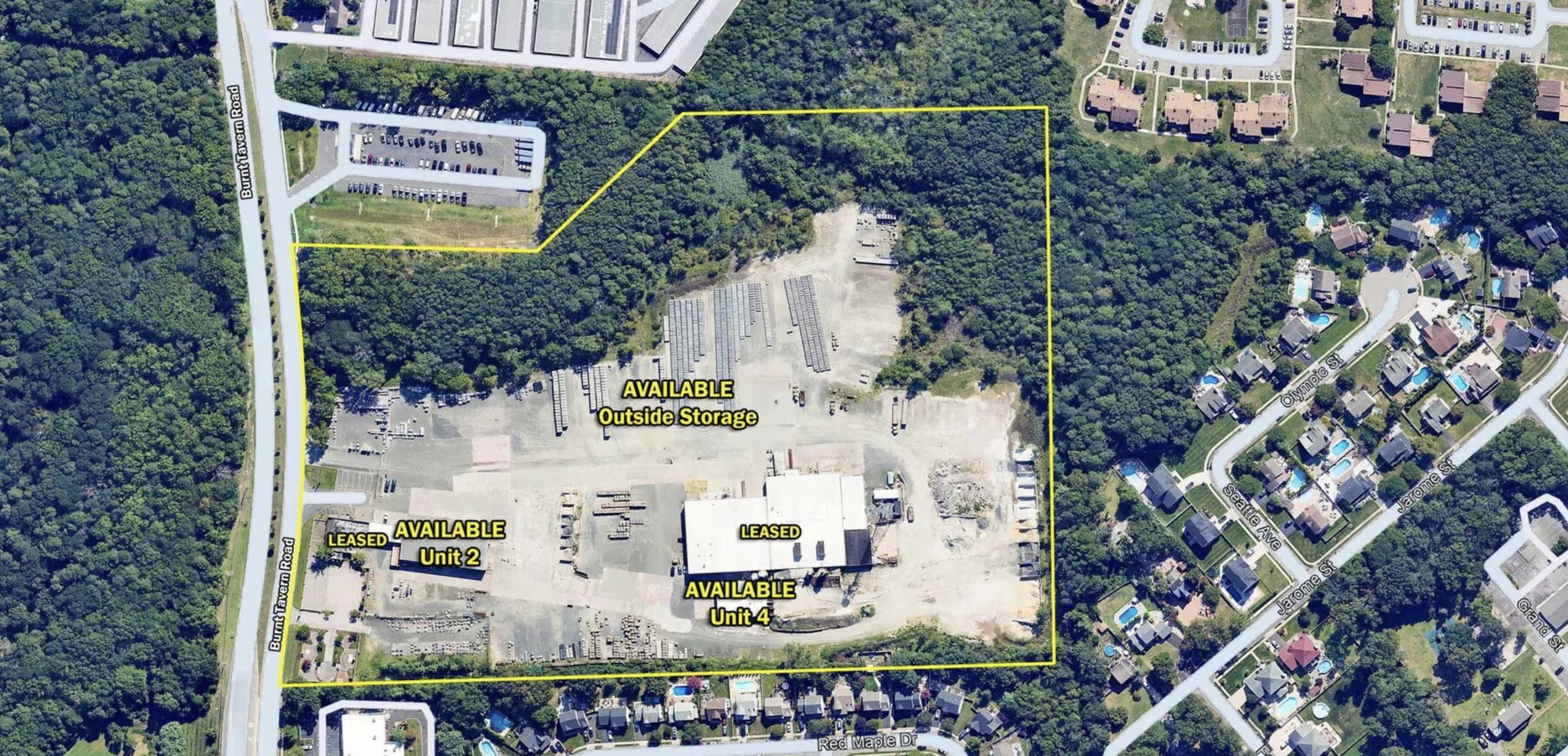
The parcel at 975 Burnt Tavern Road, Brick, N.J. (Source: Marketing Advertisement for Property)
Details of Brick Township’s settlement with challengers to the township’s state-mandated affordable housing settlement led to the first party-line split of the newly-formed township council, with a 4-3 majority ultimately voting in favor of introducing a new zoning ordinance that would result in a 264-unit housing complex being built along Burnt Tavern Road with 53 units set aside for income-based dwellings.
The settlement also led to the introduction of a separate ordinance creating a “Middle Income Housing Overlay Zone” which would permit 10 dwelling units per acre on 50 parcels of land across town that, in the aggregate, would total approximately 72 acres of land. The normal number of units that would be allowed to be constructed in these parcels would have had an average density of six units per acre.
The council, which now consists of three Republicans and four Democrats, split the vote on the introduction of the new zoning ordinances that would effectuate the settlement along party lines, with the GOP members opposing it and Democrats voting in favor of it. The Republicans held that they were elected on a platform of limiting development in town and were unwilling to accept a settlement that would increase density in some areas and allow for the creation of the large complex in another, but one Democratic member explained that his vote in favor of the ordinance was due to the possibility that rejecting the settlement could have led to even more intensive development if a judge were to have upheld additional challenges under the state’s Mt. Laurel doctrine.
|
|
The township faced two serious challenges to its findings that opposed an initial affordable housing obligation promulgated by the state that ordered the construction of 322 new units. One originated from the Fair Share Housing Center, which sued nearly every municipality in the entire state in an effort to force the construction of additional housing units. The other originated from 975 Burnt Tavern LLC, which had already submitted proposals for a 400 unit development and a 300 unit development before the township calculated its appeal. A third challenge from the developer of 100 Drum Point Road – which submitted a 60-unit plan for a parcel on that road and was rejected by the township’s planning board – was dismissed. The township council approved the settlement plan at its Dec. 29, 2025 meeting.
The most significant development proposal under the introduced package of rezoning ordinances would effectuate a settlement with 975 Burnt Tavern LLC, and allow them to construct a 264-unit housing complex there, with 20 percent – 53 units – designated as affordable housing for very low income, low income and middle income resident tiers. Little was disclosed about the developer of the site in the settlement documents, but state business records obtained by Shorebeat indicated the LLC was owned by an individual named John O’Neill, whose business address was listed as a 752 square foot apartment in Jersey City.
The property at 975 Burnt Tavern Road is a 23 acre lot that currently houses warehouse buildings and is advertised online as a “potential redevelopment site.”
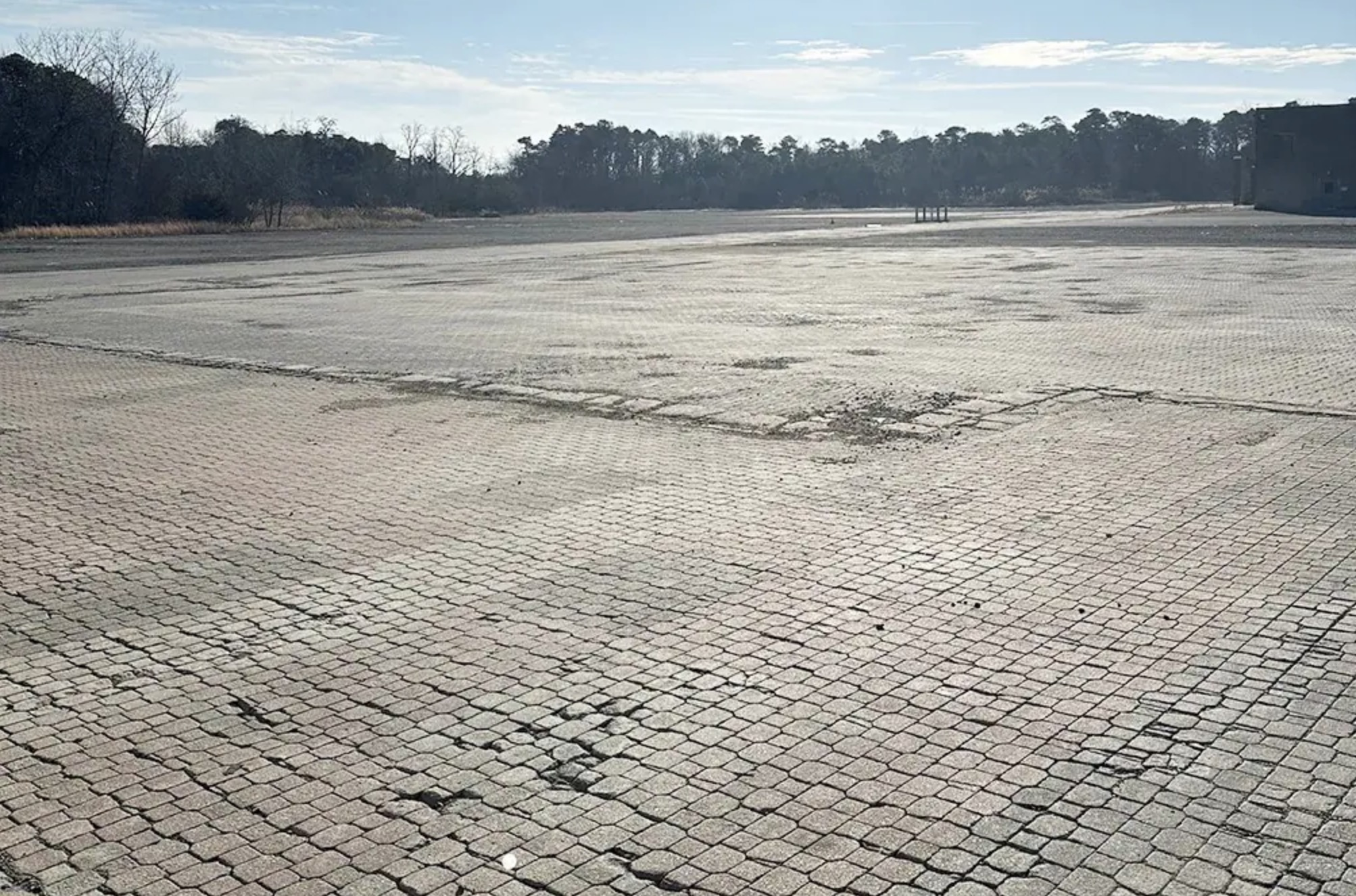
The parcel at 975 Burnt Tavern Road, Brick, N.J. (Source: Marketing Advertisement for Property)
The Fair Share Housing Center’s challenge would be settled by the creation of the aforementioned “Middle Income Housing Overlay Zone,” which will require all new residential developments of five units or more to provide a 20 percent set-aside, including for-sale or rental housing, in attached, detached or mixed use housing configurations. The overlay will cover 50 parcels of land that in the aggregate total approximately 72 acres of land, however the exact addresses of those lots were still unknown. Brick Township, contrary to its traditional practice, did not publish the supporting documents of its meeting agenda for the Feb. 24, 2026 council meeting, which normally would have included the full text of the ordinance being introduced. Shorebeat has requested a full copy.
A copy of court documents obtained by Shorebeat that detail the settlement note that the overlay zone “theoretically yields 720 total units and 144 affordable units.” But that document – embedded beneath this article – also states the township planner determined that an accounting of the properties would permit a “realistic opportunity” to yield 54 units. The properties “primarily [consist] of sites along major thoroughfares in Brick Township,” the same series of documents state.
The reaction from the council was mixed.
“I cannot vote yes on a plan that increases density in our township,” said Councilwoman Lisa Reina, saying her ‘no’ vote was “directed at a system that increasingly asks local governments to govern under threat rather than on principle.”
“Zoning and land use decisions exist because local communities are best equipped to determine what protects the health, safety and general welfare of their residents,” she continued. “Our own professionals acknowledge how limited our remaining capacity truly is. I cannot support a decision that knowingly moves us in the wrong direction today.”
Councilman Greg Cohen also balked at settling the disputes with the new zoning ordinances.
“The biggest complaint we get in this township is overcrowding and continuous traffic,” said Cohen. “If we do not push back against the state of New Jersey, they’re going to run this town instead of this council.”
Counciman Dennis Ambrosino, who supported the ordinances, warned that failing to effectuate the settlement could result in worse consequences.
“I agree very much in the spirit of what they are advocating for,” he said. “Folks have the perception that there is overdevelopment in town; everybody doesn’t like traffic.”
He then asked his fellow council members who opposed the ordinances “if they can state what the population growth has been over the past 20 years,” without elaborating.
According to Census data, Brick’s population was 76,119 in 2000, 75,072 in 2010 and is currently estimated to be 76,629.
The ordinances – the creation of the overlay zone, the requirement for 20 percent of homes within the zone to be set aside for affordable housing, and the measure that would allow the development on Burnt Tavern Road – were introduced on first reading by the council. The council’s three Republicans – Reina, Cohen and Perry Albanese – voted against its introduction, while Democratic members Ambrosino, Vincent Minichino, Steve Feinman and Melissa Travers – voted in favor of it.
The ordinances require a public hearing and an additional vote on second reading before they are formally adopted. That vote normally occurs at the following council meeting which, in this case, is scheduled for March 10, 2026 at 7 p.m. at the township municipal complex.
~
Settlement Document:



Local Business
Ferry From NYC Makes ‘Test Run’ to Point Pleasant Beach Dock

Police, Fire & Courts
Brick Spa Allegedly Utilized in Prostitution Ring

Police, Fire & Courts
Brick Juvenile Charged in Fatal Herbertsville Hit-and-Run Crash

Police, Fire & Courts
Brick Cops Being Outfitted With New Firearms
Local Business
Ferry From NYC Makes ‘Test Run’ to Point Pleasant Beach Dock


