
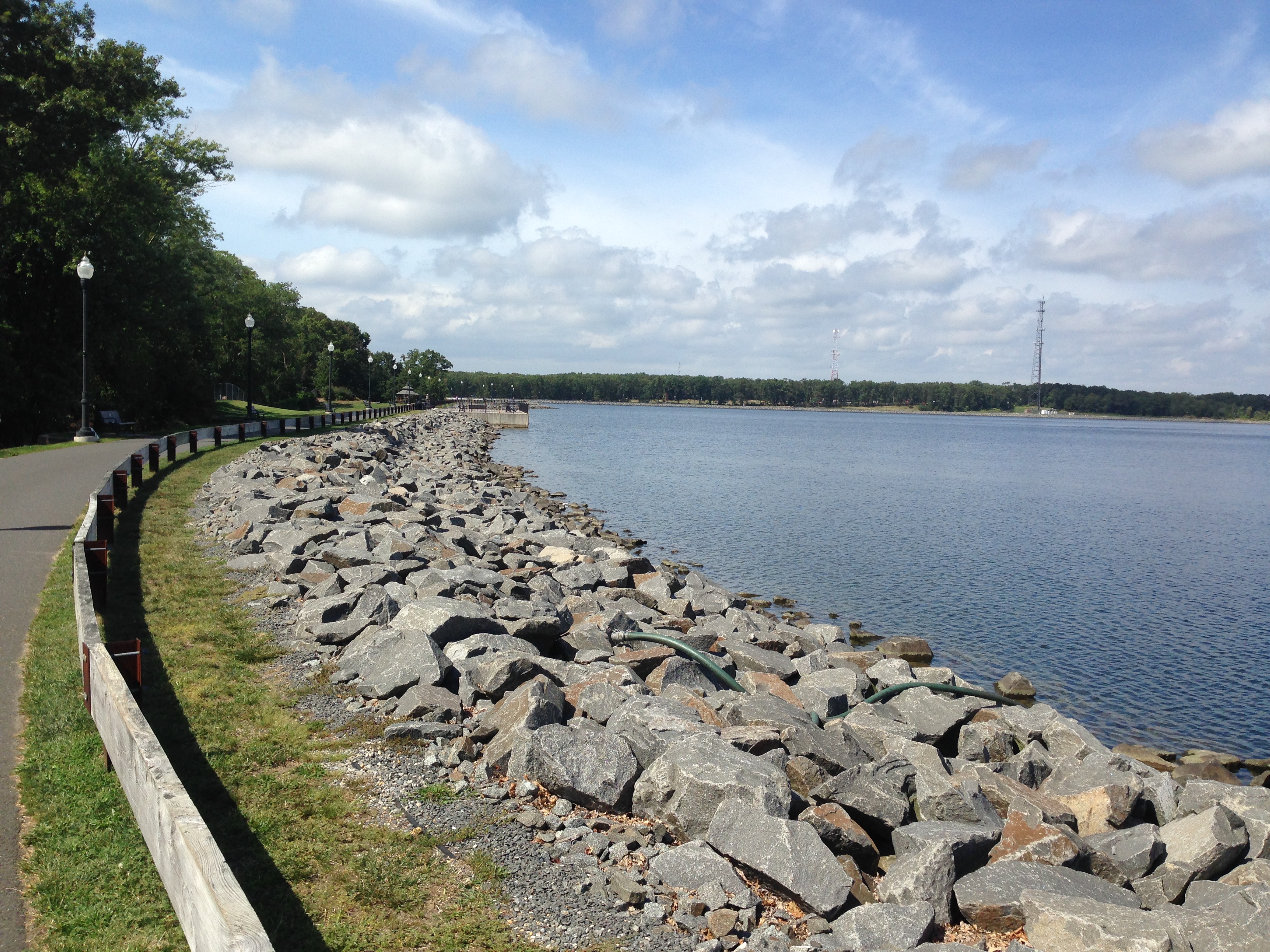
The Brick Township Reservoir (Photo: Daniel Nee)
The rumors are true. A walking path at the Brick Reservoir beloved by Brick residents – especially those in the northern half of town – is going to close for 10 months while an ambitious project is performed. The Brick Township Municipal Utilities Authority, known as the BTMUA, will close the walking path in August, and it is expected to remain closed until approximately June of 2026.
The reservoir is unique, in that Brick is one of the few towns in New Jersey to actually operate its own municipal reservoir. While rare, the capability even exists for water to be sourced directly from the reservoir and sent to homes, as occurred during Hurricane Sandy in 2012 in order to keep fresh, clean water flowing to residents after many of the traditional systems were knocked offline by power failures and infrastructure damage.
Last summer, when the now-imminent project was first announced, Shorebeat spoke with BTMUA Commission Chair Paul Mummolo about the need for the project and what it will entail. Now that groundbreaking is near, we thought it would be worth reviewing some of the highlights of the project so residents know why their favorite jogging path will be out of commission for a long stretch.
|
|
The Brick Reservoir is a sprawling 120-acre source holding more than 850 millions gallons of drinking water. Located along the northernmost reaches of Sally Ike Road, the property itself is so large that is extends into neighboring Wall Township. The reservoir is built in a former gravel pit that was converted to hold drinking water – and some long-time residents doubtlessly remember the property before there was any water inside it. It runs to a depth of about 80 feet, and is most familiar to residents who use its picturesque walking trail for a stroll or jog. Last summer, the reservoir was noticeably shallow along its edges as the Shore area suffered from one of the worst droughts in recent memory.
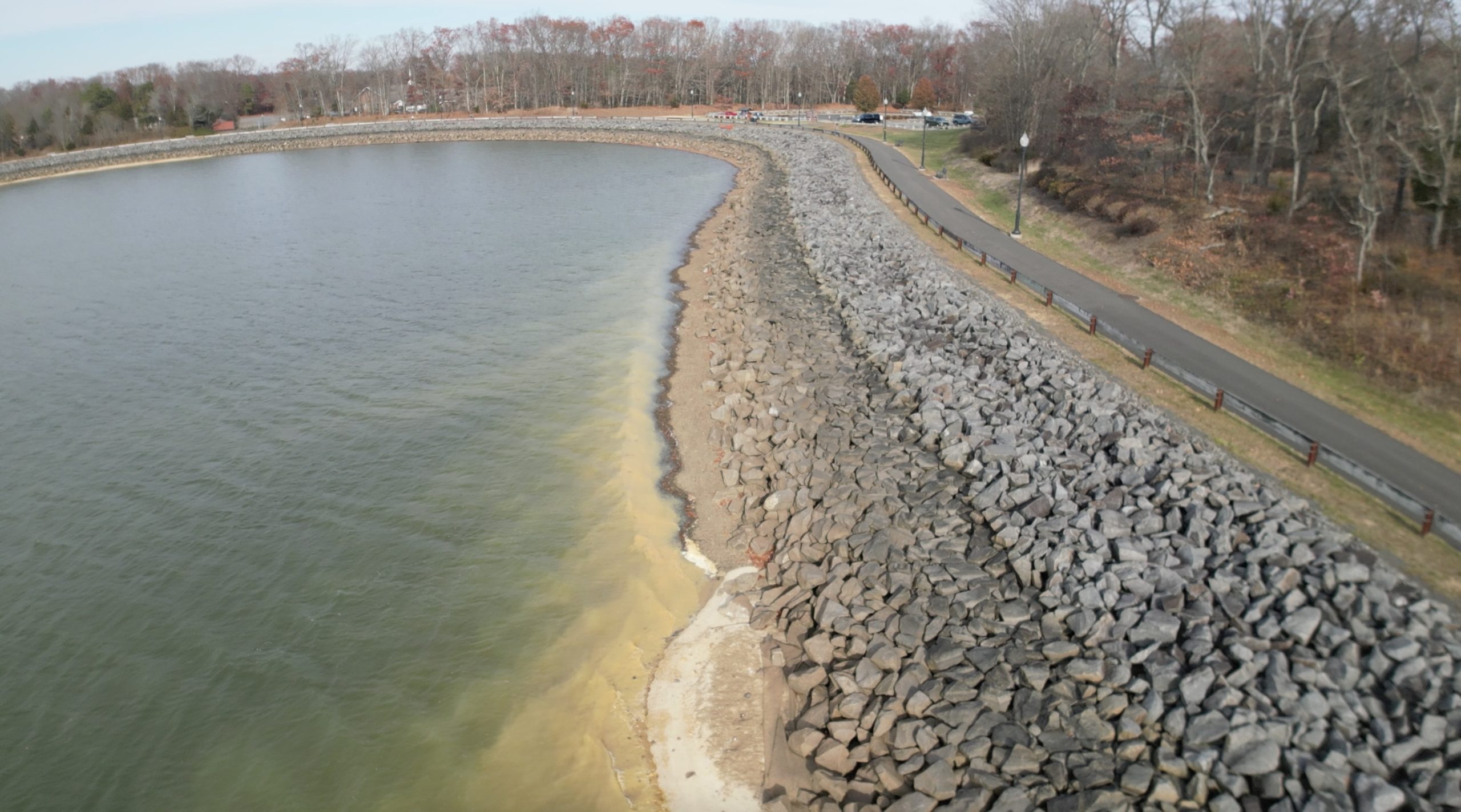
Dry conditions at the Brick Township Reservoir, Dec. 1, 2024. (Credit: John Barrett)
As for the improvement project, the work will be highly-technical, but the concept is relatively simple.
A giant network of underground pipes installed over the course of years while the reservoir was being built in the early 2000s connects it to the Metedeconk and Forge Pond – miles away – so it can be refilled when necessary. Refilling the reservoir is done at times when conditions are favorable, with engineers and technicians looking toward advanced monitoring systems to choose the best time to do so.
“Forge Pond has monitors to tell if salt water intrudes,” Mummolo explained. “If we have good flow at the Metedeconk, we pump it to the reservoir and then it’s gravity-fed back to the plant where it goes through the filtration system.”
Because of this system, Brick was able to avoid service losses and boil-water advisories that were common elsewhere during Sandy.
Planned for some time, the current maintenance project by the BTMUA that will increase both the capacity and stability of the reservoir. Engineers have been planning the effort for years, taking into account the effects of long-term climate change which could bring longer periods of drought as well as unusually rainy stretches of weather.
The project will increase the overall capacity of the reservoir, raising its depth from 80 feet to about 95 feet. It will also stabilize the banks of the body of water below the steep slopes along the edge which now consist of “rip-rap” stones. A fabric-form concrete mattress will be installed to stabilize the banks where the rip-rap is now located, preventing sand from mixing with the water and having to be filtered out.
The project will also remediate the existing sand-covered sloped surfaces. The “mattress” that will be installed will consist of a geotextile structure that will be placed on the side slopes and ledge. Additional upgrades will include the earthwork, sub-grade preparation, placement of stabilization matting, concrete work, and placement of soil erosion measures, plus “incidental restorations,” according to a bid specification sheet.
“We’re going to do that whole area around to allow it to go down a few more feet,” said Mummolo.
The appearance of the reservoir will not change significantly, but close observers may notice exposed sandy areas, in the future, having been replaced by the concrete-filled fabric mattress.
“The engineers from MUA went and visited other reservoirs that have it – because there are other ways to accomplish the same result – but this seems to be the best way to do it,” Mummolo said.

Dry conditions at the Brick Township Reservoir, Dec. 1, 2024. (Credit: John Barrett)
In the more immediate future, the BTMUA issued some new guidance for residents on what to expect while the project is underway.
“BTMUA will be lowering the reservoir water level during the summer in preparation for these improvements,” the agency said last week. “For safety reasons, public access to the reservoir and surrounding recreational areas will not be allowed during this period. We understand this may cause some inconvenience and appreciate your patience and cooperation as we complete this vital work.”
The exact date on which the walking path will close has not yet been determined, but will be announced on the BTMUA’s website soon. Likewise, the site will feature periodic updates on the project and, eventually, news on the reopening date.




Police, Fire & Courts
Brick Physician and Family Killed in Upstate N.Y. Plane Crash


Police, Fire & Courts
Brick Physician and Family Killed in Upstate N.Y. Plane Crash

Police, Fire & Courts
Brick Father and Son Arrested for Drug, Weapons Offenses


