
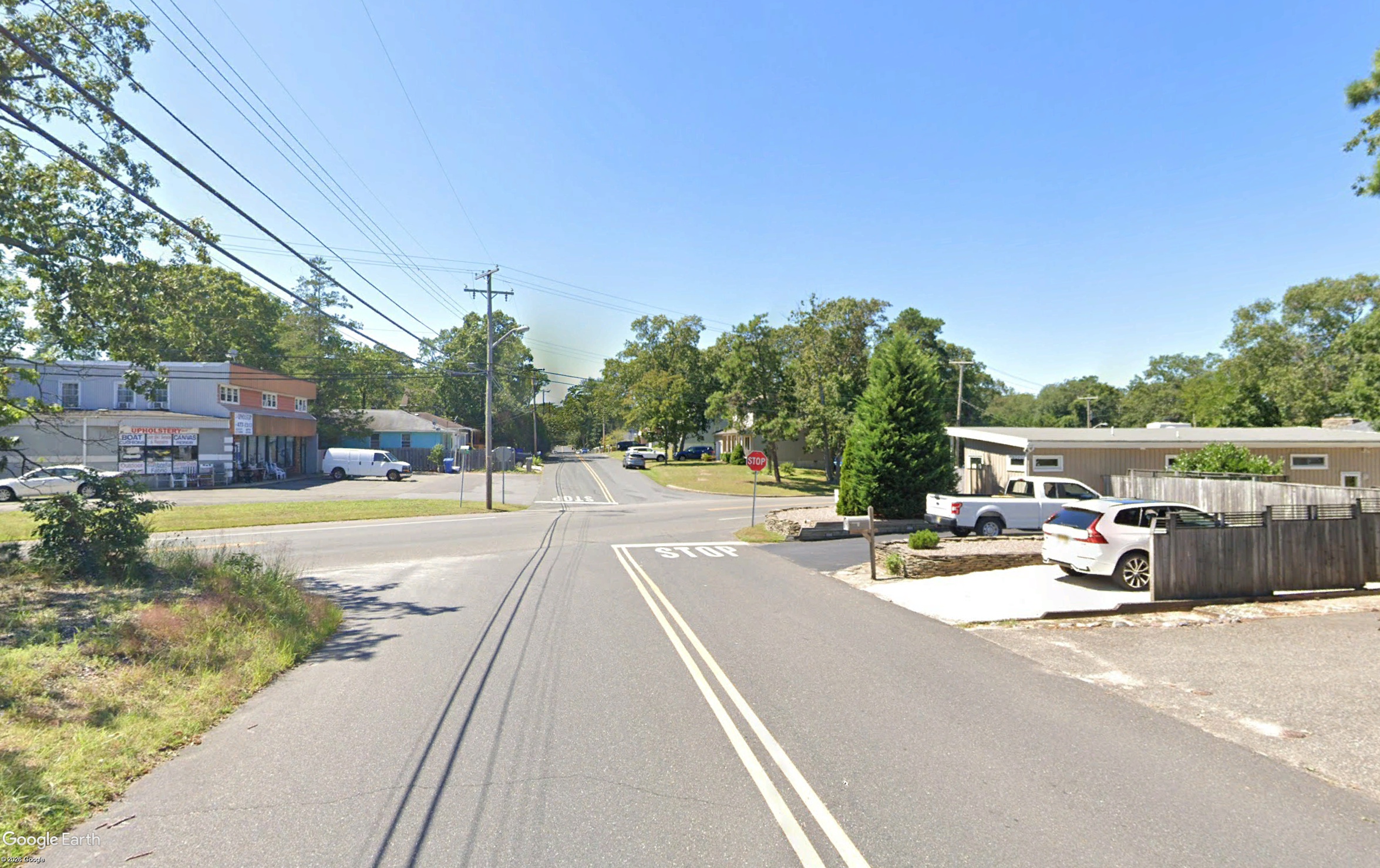
Lynnwood Avenue at the intersection with Laurel Avenue. (Credit: Google Earth)
It may be a classic tale of perception versus reality in Brick Township’s Cedarwood Park neighborhood, where residents expressed concern over speeding traffic that increased after “double yellow” lines were painted during a repaving project. A traffic study showed otherwise, but officials said they are willing to order another study to be sure.
The mini-controversy erupted when a resident approached the township council at its Jan. 6, 2026 reorganizational meeting, frustratedly chronicling how he had spoken to police officers, visited town hall, and even met with the township administrator over his concerns about speeding on Lynnwood Avenue, which runs in an east-west direction about halfway between Mantoloking and Drum Point roads. The resident, Brendan Stuk, said he appreciated a paving project that had been completed on his street in 2021, but said it came with a dark side.
“It has created unintended and dangerous consequences,” he told council members, three of whom were just minutes removed from being sworn into office for their first meeting. “What was once a quiet neighborhood street has effectively become a speedway.”
|
|
The township responded to concerns from residents by notifying the police department’s traffic safety division and installing more speed limit signs, but Stuk maintained that was ineffective. The roadway markings, he said, were the culprit.
“The township added a double-yellow centerline to the road,” he said. “Most of us would not expect or accept a double-yellow line on a 25 m.p.h. residential street. That kind of roadway marking sends the wrong message – instead of calming traffic, it signals drivers that it is a through-road, built for speed.”
After pouring over data from a traffic study conducted at the time of the paving project, and reviewing accident data from before and after the work was completed, officials said the contention simply appeared to be wrong. Lynnwood Avenue carries a 25 m.p.h. limit, and this was backed up by study data that confirmed the natural speed of traffic on the road was 31 m.p.h. In New Jersey, like many other states, speed limits must follow what is known as the “85th percentile” rule, an engineering practice of setting speed limits based on the speed closest to which 85 percent of motorists actually drive. This is widely construed to be the safest, most natural speed for a roadway, and setting a limit too low has found to be unnecessarily distracting to driver, making it more hazardous.
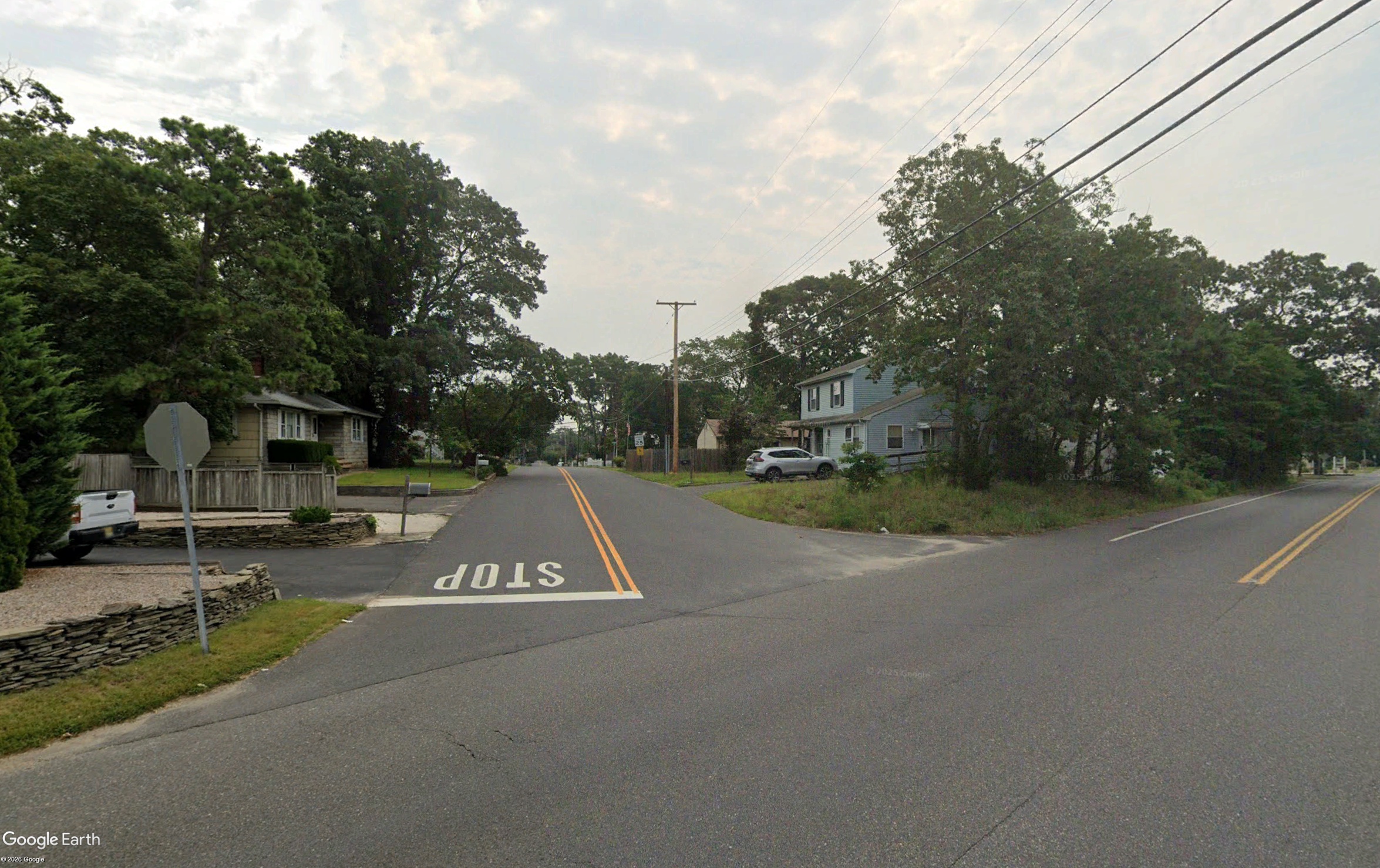
Lynnwood Avenue at the intersection with Laurel Avenue. (Credit: Google Earth)
At times, over the years, township officials have responded to requests from residents for traffic studies with the hope of reducing a speed limit, while the results showed the existing speed limit was theoretically too low. The engineering practice has worked its way into the court system as well, with recipients of speeding tickets have successfully argued that their case should be dismissed due to improper speed limits that have been proven by such studies. In the case of Lynnwood Avenue, an analysis of crash data turned up a reduction in accidents in the years before and after the road was repaved and the double-yellow lines were painted.
Crash data revealed a decrease in accidents following striping, from six crashes to two crashes per year, said Councilwoman Lisa Reina. Additionally, the data showed that there had been six injuries resulting from accidents in the time period reviewed prior to the repaving, while zero injuries occurred since the project was completed.
“Following striping, there were no occupant injuries in subsequent crashes,” said Reina.
The ultimate proof will be in the pudding once again, according to council members. Reina said the township will conduct a new traffic study on Lynnwood Avenue to confirm the speed of traffic is correctly measured, and qualified personnel will review the markings.
“This council is committed to collaboratively working to achieve the best possible outcome, informed by experts, data and residents,” said Council President Steve Feinman, who introduced the discussion at Reina’s request.
The council solicited bids for the Cedarwood Park West repaving project in 2016 and ultimately awarded a $728,789 contract with Esposito Construction, of Old Bridge, to repave Lynnwood Avenue, along with neighboring streets Monmouth Avenue, Glenwood Avenue, Manchester Avenue, Fairfield Avenue, Piel Avenue, Community Drive, Grove Avenue, Pershing Avenue, and Sterling Avenue.



Police, Fire & Courts
Brick Physician and Family Killed in Upstate N.Y. Plane Crash


Police, Fire & Courts
Brick Physician and Family Killed in Upstate N.Y. Plane Crash

Police, Fire & Courts
Brick Father and Son Arrested for Drug, Weapons Offenses


